





Before the wildebeest, before the lions, before anything with a nervous system decided this particular stretch of East Africa was worth inhabiting, wind was already here. Wind made this world its home long ago by shaping the land, carrying moisture off oceans and pushing seed, spore and ash across distances nothing with legs could cover. Every living thing that eventually arrived found the same fact waiting – the air moves, and it carries things with it. The question was only ever what to do with that. Consequently, wind became the oldest communication network, and almost nothing that lives ignores it.
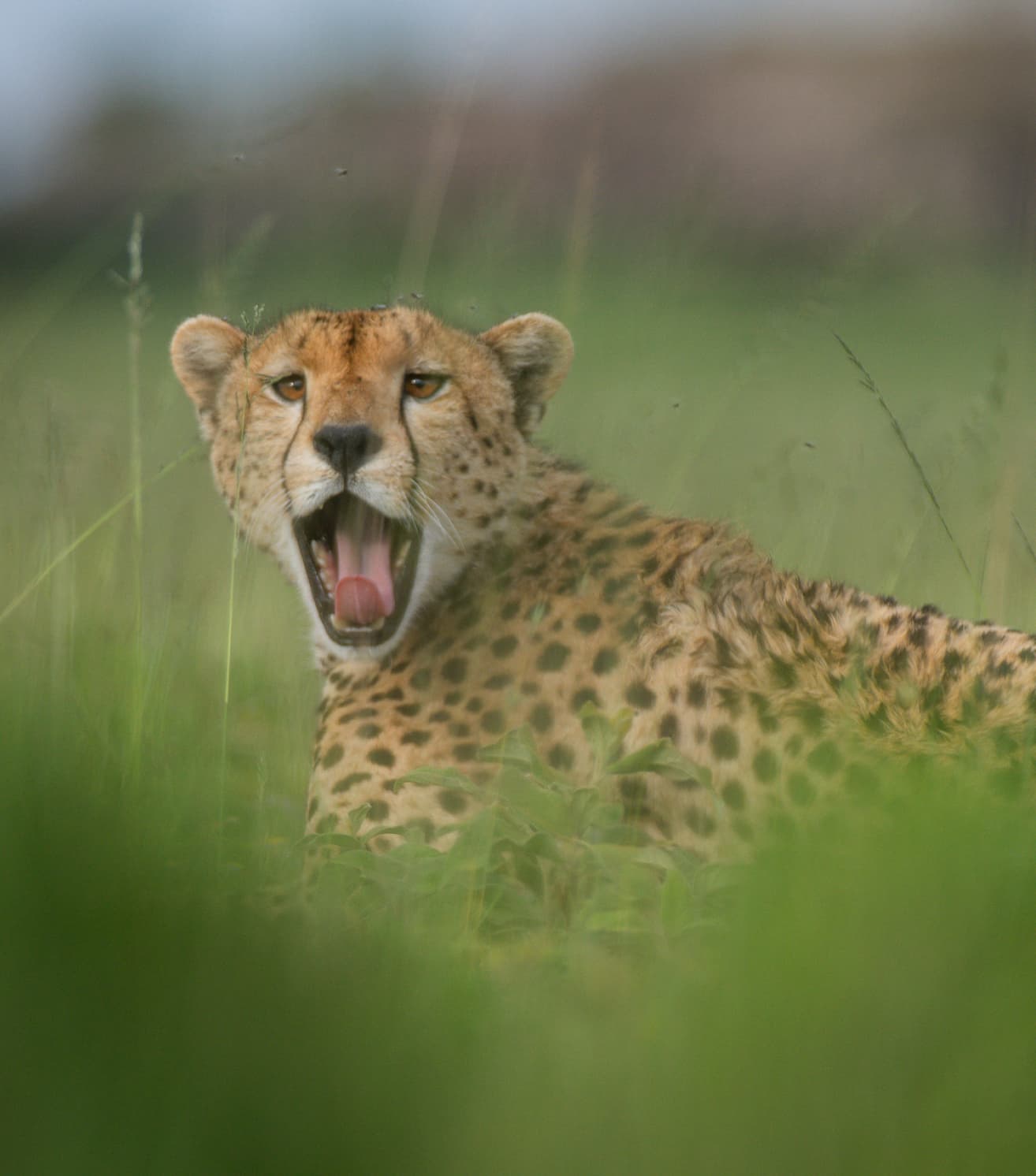
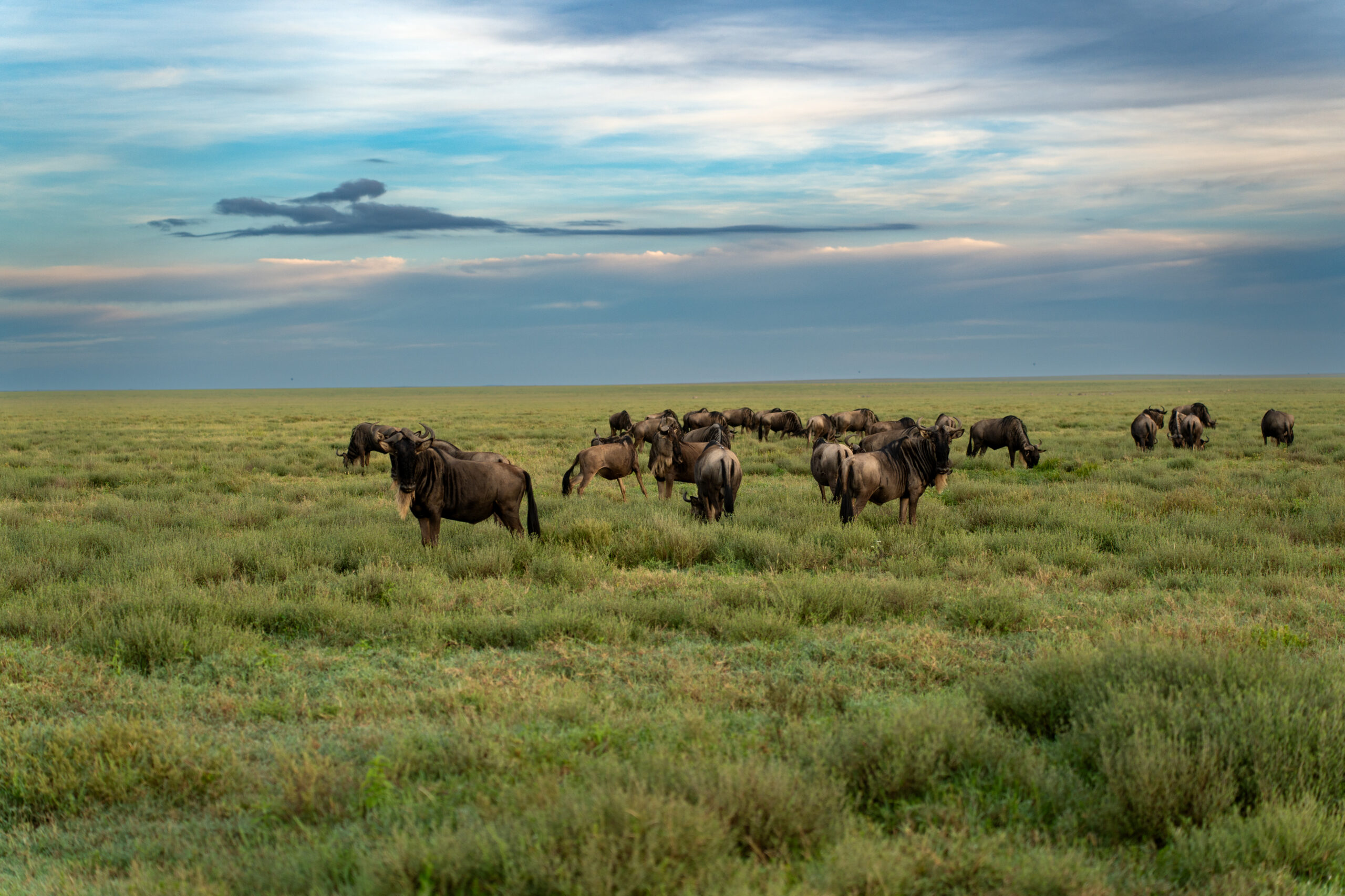
For most larger herbivores, smell is primary. A wildebeest’s eyesight is unremarkable, its hearing is good. But place yourself downwind of one and watch what happens…nothing, because it already knew you were there. Scent molecules carried in air currents tell a grazing animal not just that a predator exists, but roughly where it is, how recently it passed, and in some cases, whether it is actively hunting. This is why predators on plains are so often seen circling wide before a stalk. A cheetah approaching a Thomson’s gazelle may spend twenty minutes repositioning, not because it’s indecisive, but because it’s reading the same air its prey is reading and knows what it cannot afford to give away.
Plants do something similar, but on a slower clock. Acacia trees across East Africa have long been observed to raise tannin levels in their leaves when browsed by giraffes or elephants, making the foliage bitter and less digestible. Researchers later noticed that acacias downwind of the browsed trees began doing the same before any animal reached them. The trees were warning each other. It turns out that the stressed tree releases ethylene gas; this airborne chemical compound drifts on the wind, allowing neighboring trees to prepare in advance. In the open plains, where wind moves predictably across distances, a browsed acacia can chemically prime trees many meters away before the herd arrives.

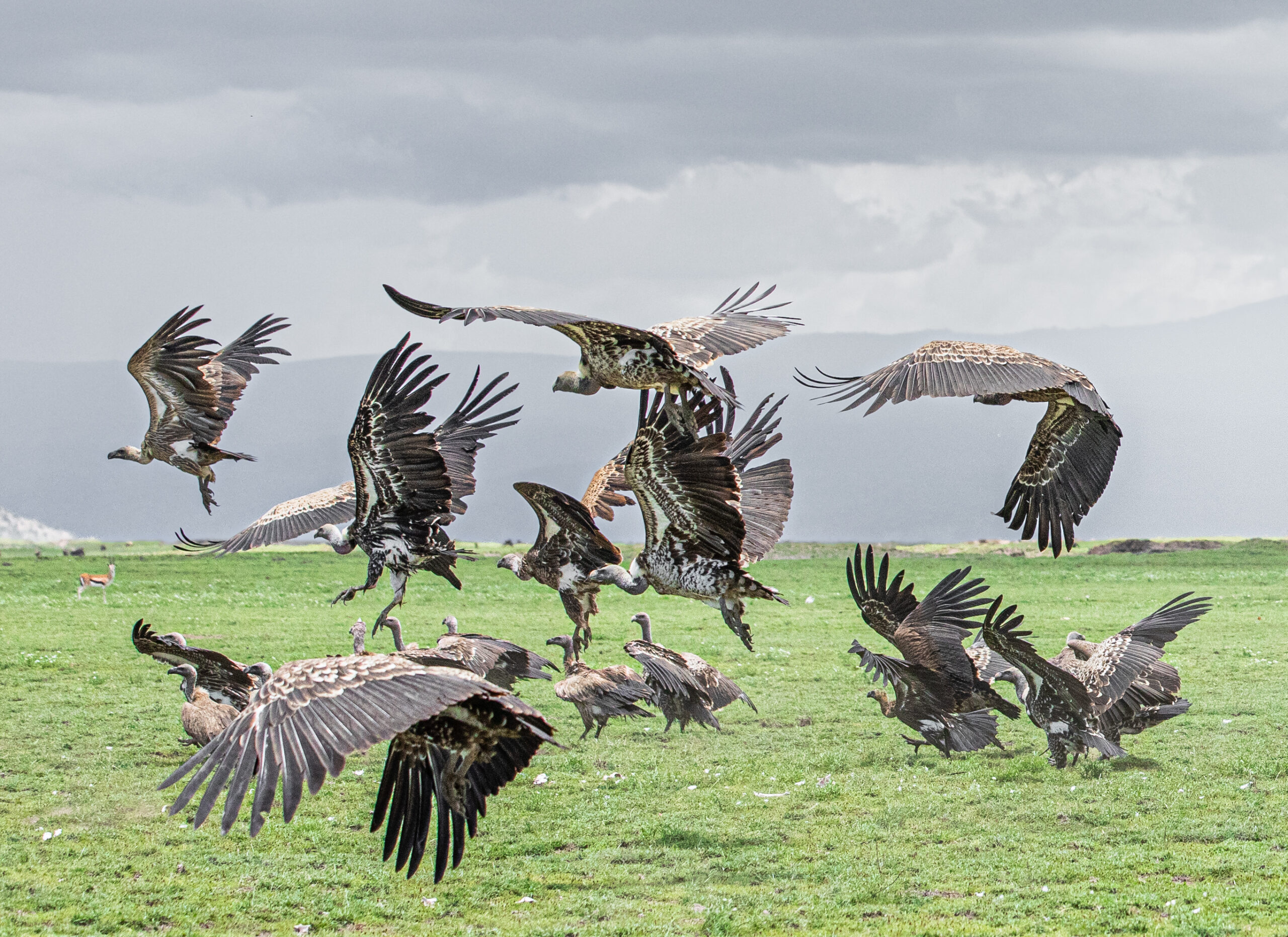
Birds use wind less for communication and more for navigation, though the distinction blurs. White storks migrate through East Africa each year by riding thermals rising from sun-heated rock. They do not flap their way south; they soar, gaining altitude on invisible columns of warm air before gliding toward the next. Hundreds converge along the same aerial pathways because they are all reading the same atmospheric patterns.
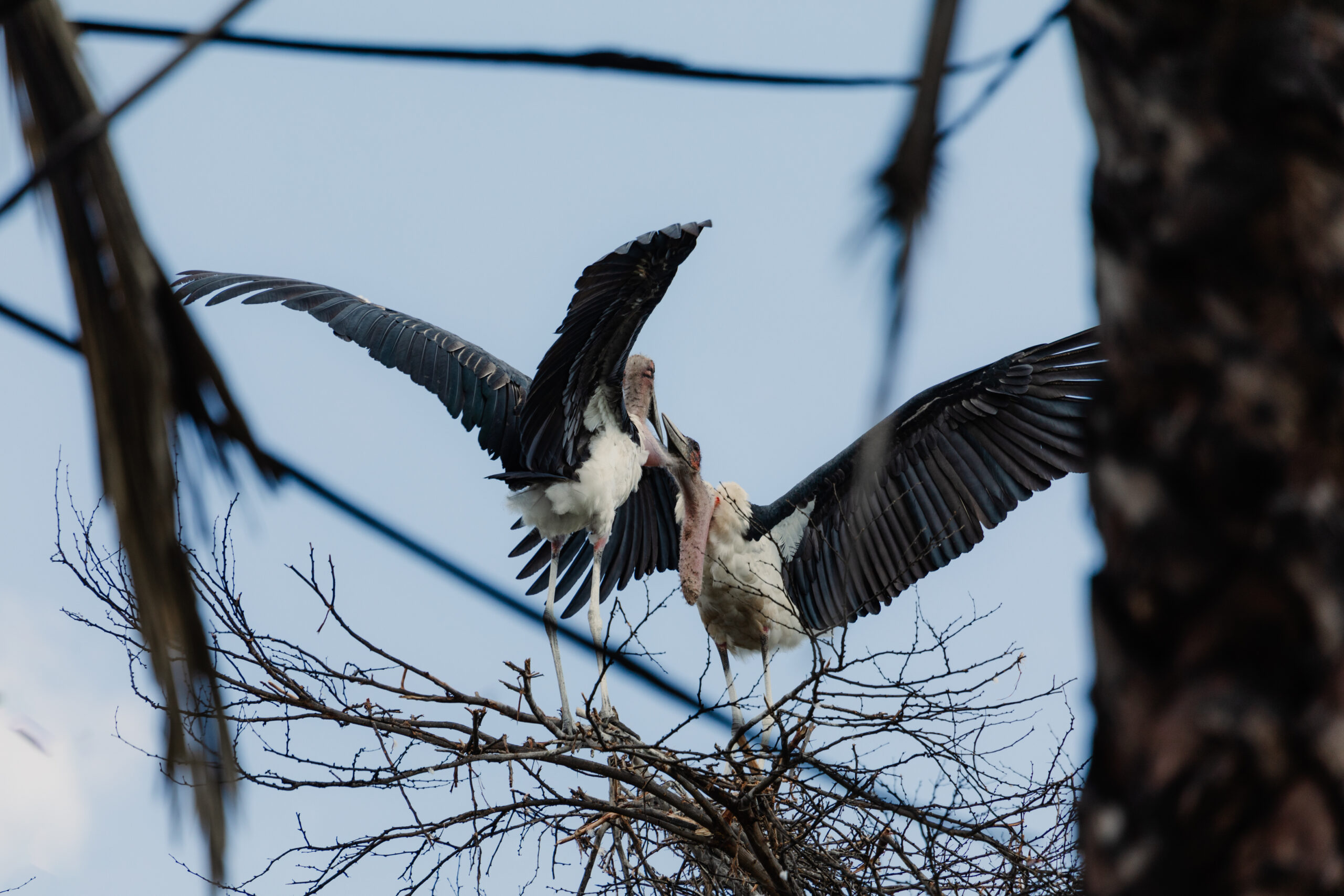
Vultures do something related with carrion. A single bird dropping toward a carcass becomes visible from kilometres away to every other vulture in the sky. The descent itself is a signal. One bird reads the air correctly, and in doing so broadcasts the information to every set of eyes above the plain.
Even some of the savannah’s smallest inhabitants exploit air currents in ways that feel almost implausible. Male emperor moths can detect pheromones released by females from kilometres away, following impossibly faint chemical trails drifting through the night wind. The air becomes a map. A single invisible thread is enough to guide an insect through darkness toward another individual it has never seen.
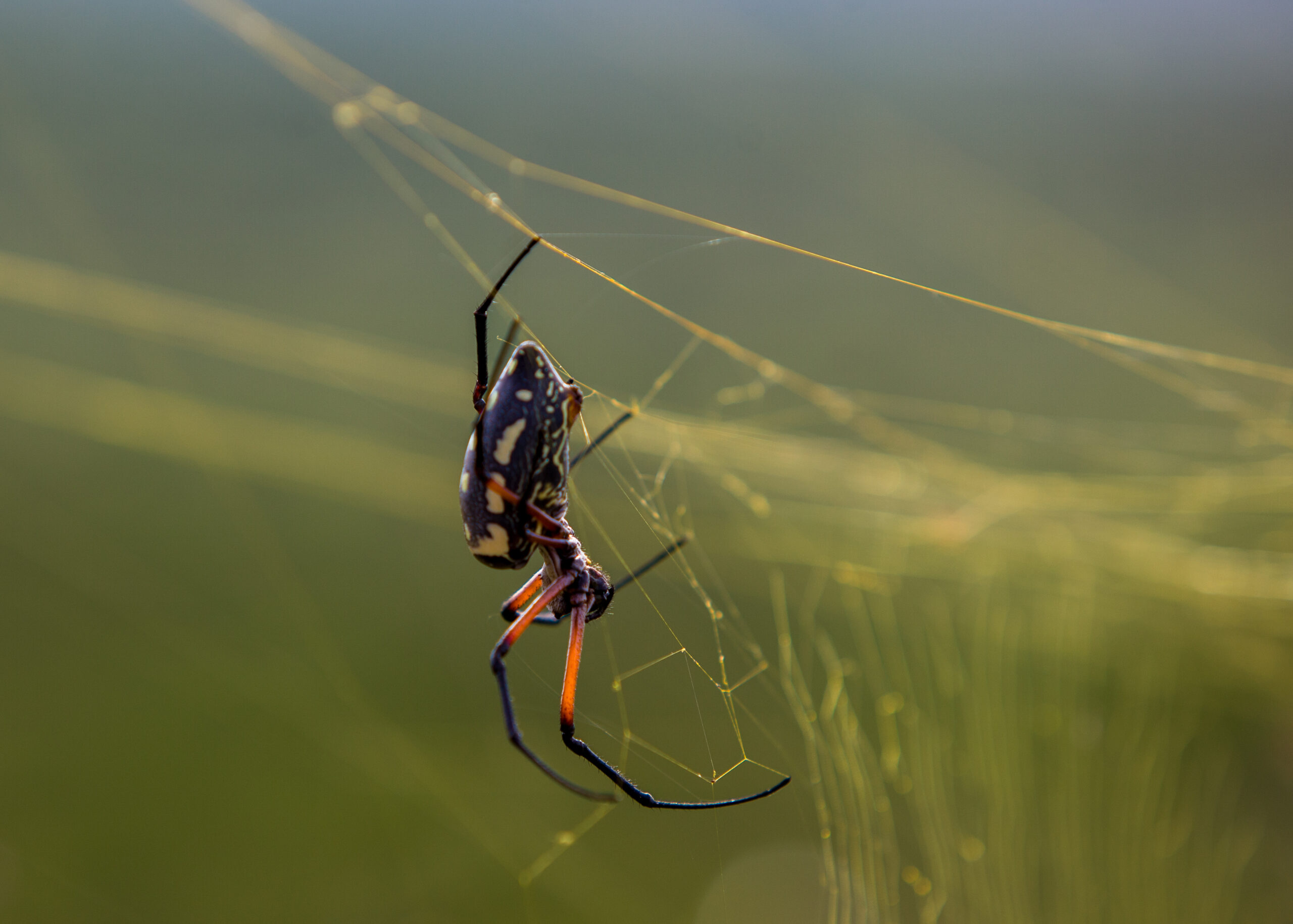
Spiders also make use of wind. Shortly after hatching, some spiderlings climb to the tips of grasses or branches, raise their abdomens into the air, and release strands of silk. If conditions are right, the fibres catch electrostatic forces and rising currents, lifting the spiders skyward in a process called ballooning. Creatures smaller than a fingernail can travel extraordinary distances this way, sometimes hundreds of kilometres, effectively becoming airborne plankton. There are records of ballooning spiders landing on ships far out at sea and even being detected high in the atmosphere. For a tiny animal with no wings, wind becomes both transport and destiny.
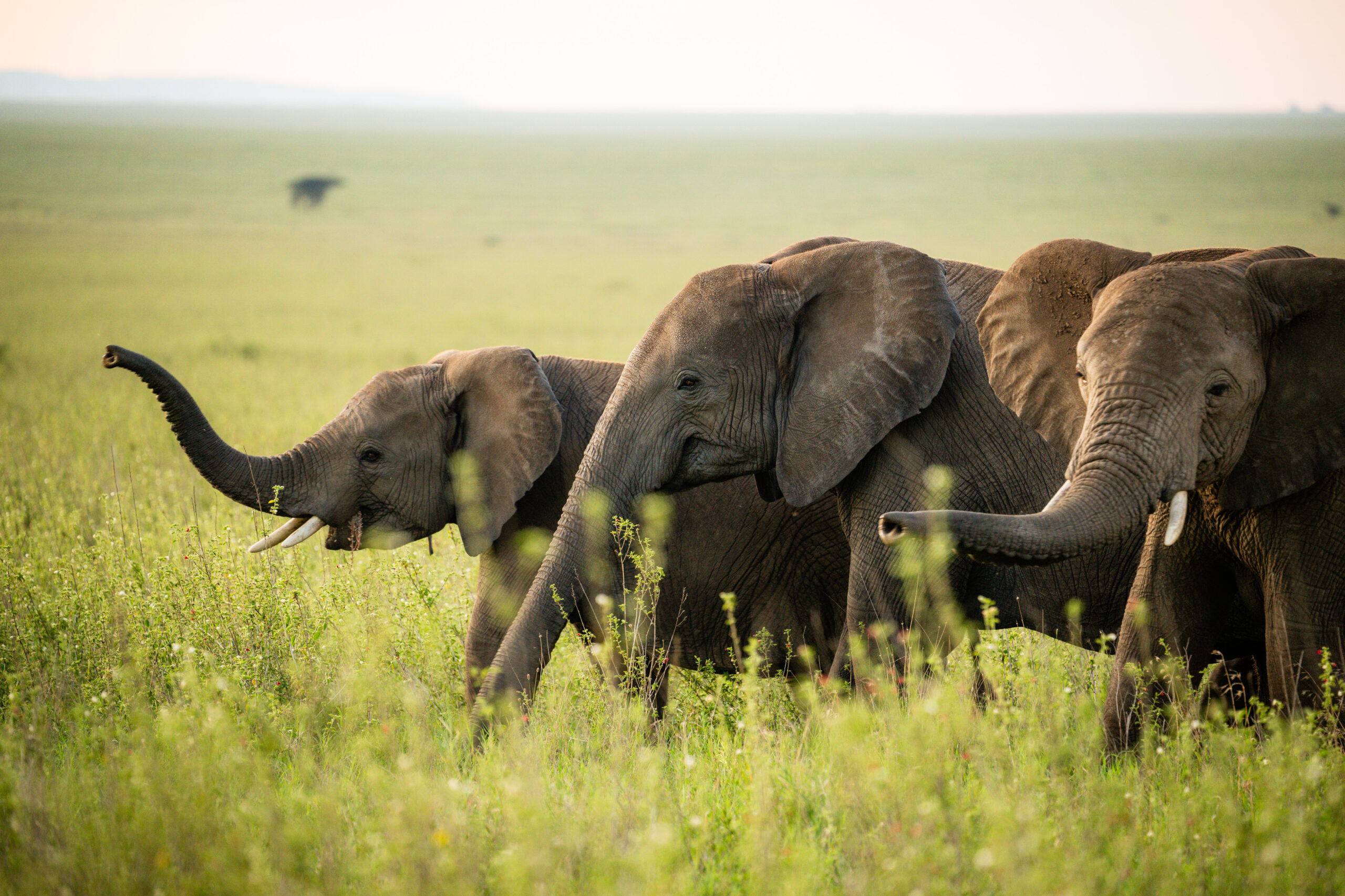
The wind also carries sound in ways animals exploit. Elephants utilize the evening cooling layers (known as thermal inversions) to communicate over vast distances. When cold air settles near the ground beneath a lid of warmer air, it traps sound waves, reflecting them along the surface like a megaphone. An elephant’s rumble, which might travel only a few kilometers during the heat of the day, can glide effortlessly across ten kilometers of the nighttime plains, riding the stratified air. Some ground-dwelling birds appear sensitive to subtle changes in pressure and low-frequency wind vibrations before storms arrive, altering their movements hours before visible weather shifts. The atmosphere itself becomes an early warning system.
There is something worth sitting with in all of this. Focusedly, that the savannah at any given moment is saturated with signals we have no apparatus to receive. Chemical warnings drifting between trees. Low-frequency calls rolling invisibly across the plains. Scent maps written by animals that moved through in the last six hours, still suspended in the morning air, slowly dispersing. The wind does not just move through this landscape. It runs through it like a nervous system.


