


A stay at Koroi Forest Camp.
Arusha National Park is not dramatic in the way people expect the wilderness to be. It does not erupt outward in endless horizons, nor does it rely on a theatrical scale or thunderous spectacle to announce its presence. Instead, it draws you inward with a slow, magnetic pull, guiding you into its breathing, living heart with soft green tendrils. A three-night stay at Koroi Forest Camp is an invitation to slow down and learn how to listen to the forest’s whispering instructions.
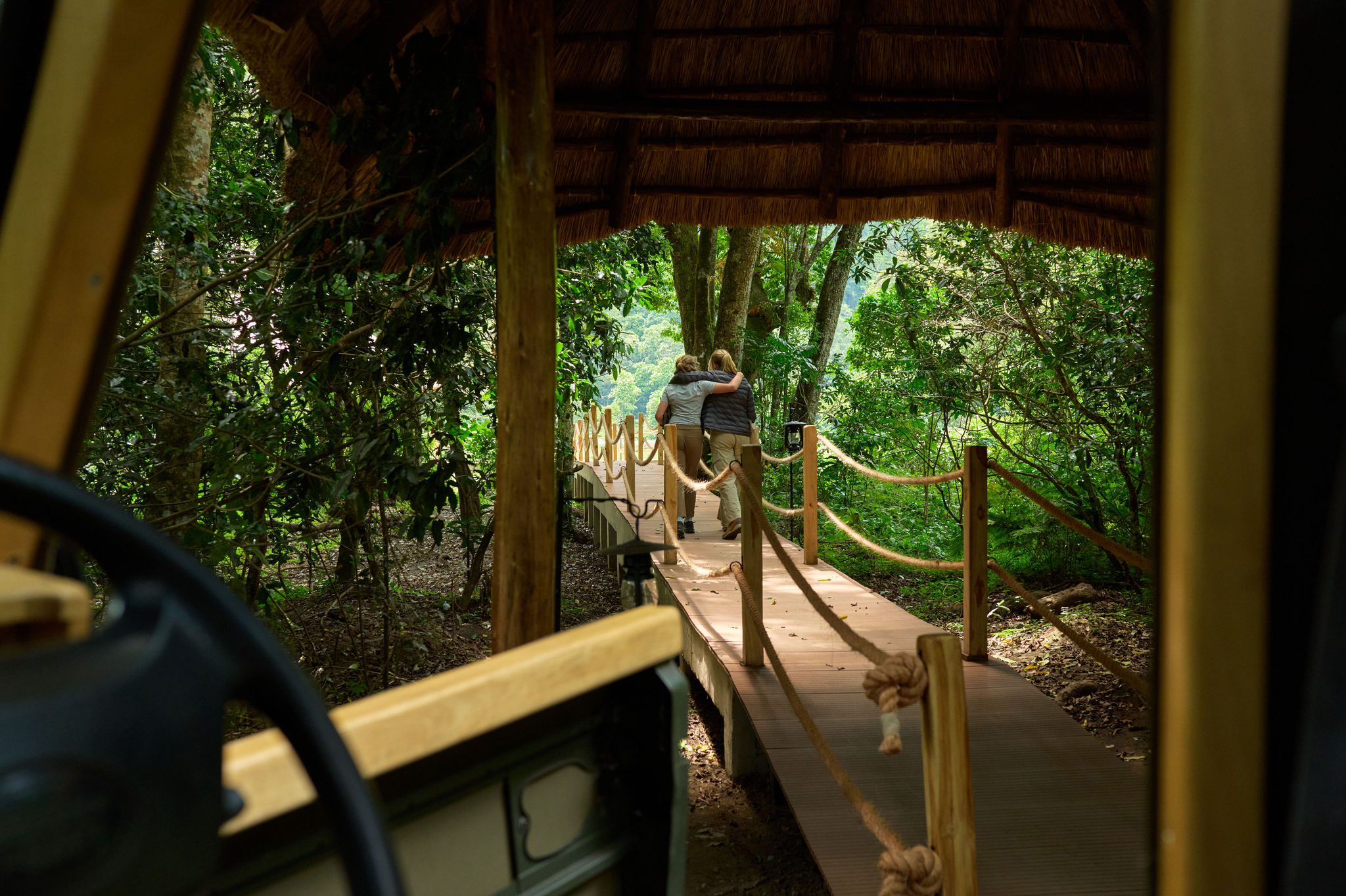
Upon arriving in the afternoon, rounding the final bend into camp just as the evening light begins to fade, you find yourself completely swallowed by this environment. The chalets sit low against the trees, entangled in thick trunks and deliberately unobtrusive. There is no separation between camp and wilderness here. The forest presses close to everything. The first thing you notice is not what you see, but what you stop hearing as the static of everyday life disappears, replaced by the dense acoustic world of repetitive condensation drips, wind moving high overhead, and strange calls carrying across invisible distances. That first night, you fall asleep realizing the mountain darkness feels entirely, beautifully inhabited.
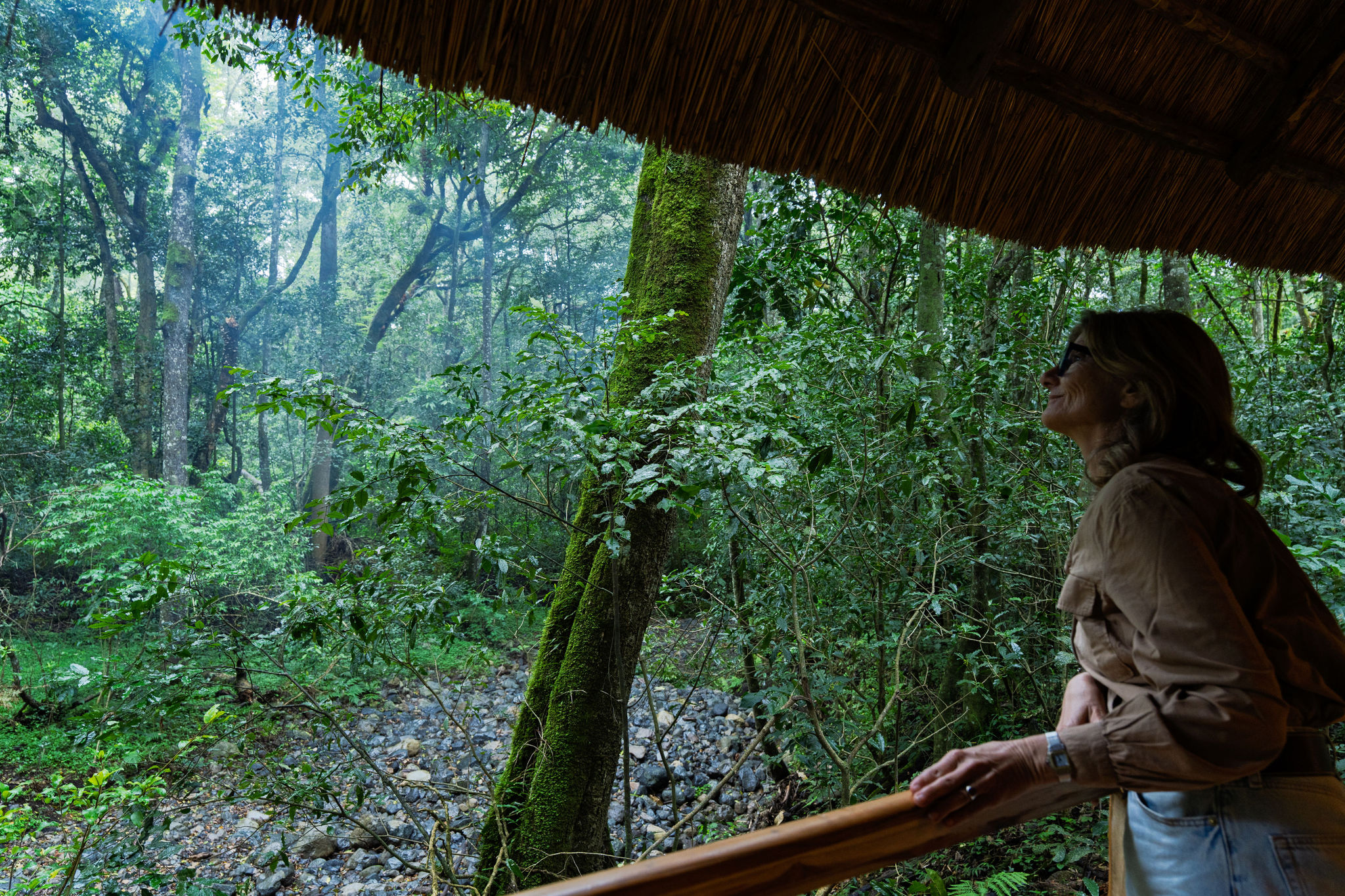
Your first morning begins before dawn with a short walk toward the canopy platform, where flashlights briefly catch the silver undersides of leaves and the slick black bark of trees soaked in mountain moisture. Coffee is served high above the trees just as the first pale light, in shades of peach and periwinkle, spills across the forested folds of Mount Meru, allowing you to witness the forest wake in stages, first movement, then sound, then life unfolding everywhere at once. Light arrives filtered through layers of canopy so dense that even midday can feel muted and green, full of a chlorophyll glow.
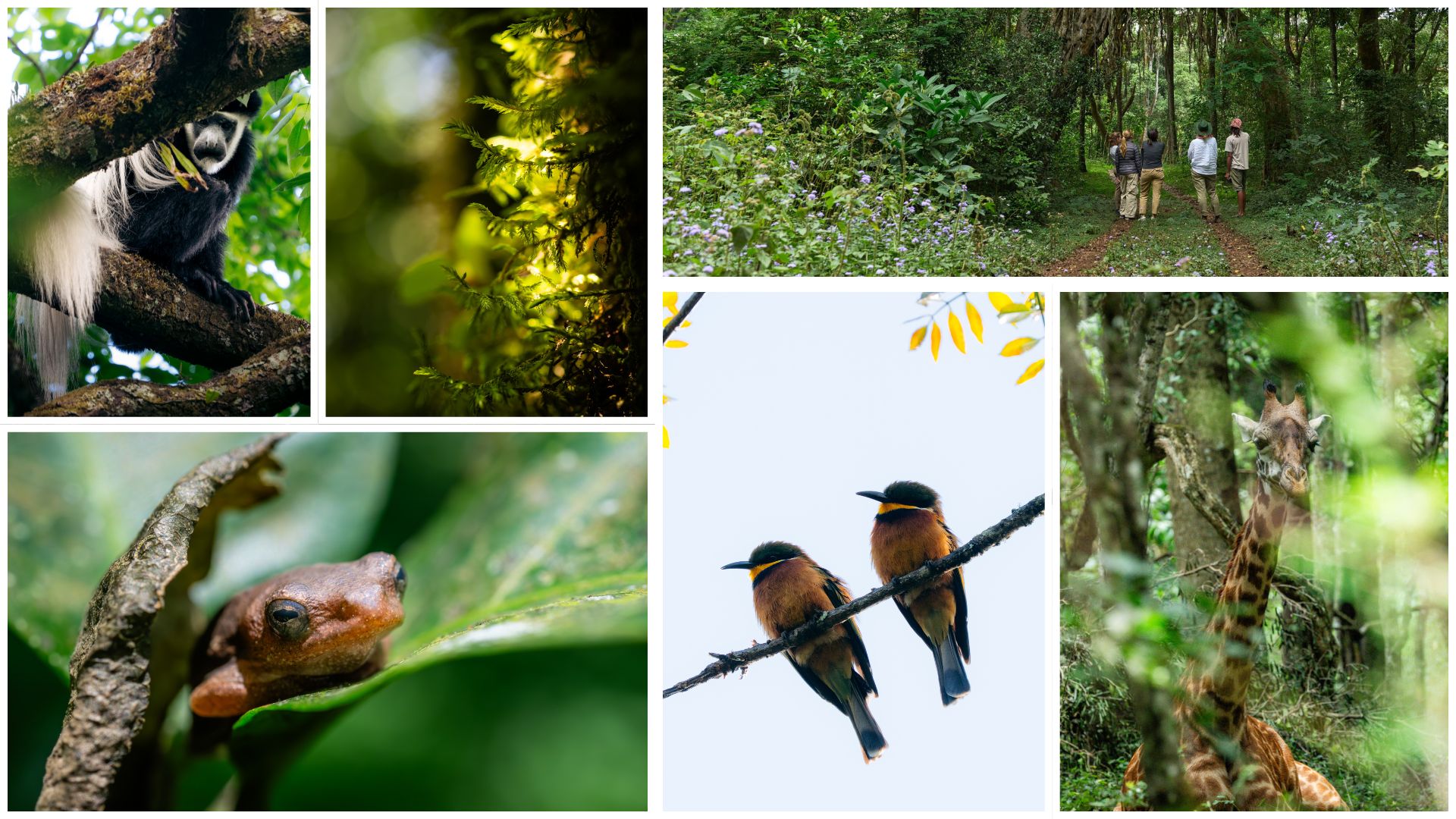
In the afternoon, the journey toward the Momella Lakes reveals how dramatically the landscape can transform, opening up into wide volcanic plains scattered with fever trees and seven shimmering shallow lakes. Rich in algae and minerals, these waters serve as a famous haven for thousands of pink flamingos and diverse waterbirds. As sunset approaches, you enjoy drinks and snacks overlooking this unexpected expanse while Mount Meru stands immense and all-knowing in the background, her forested slopes gathering clouds and holding the entire landscape in a kind of quiet watchfulness. The drive back to camp after dark reveals a nocturnal world where eyeshine flashes briefly from the roadside and elusive shapes move through the edges of the spotlight beam.
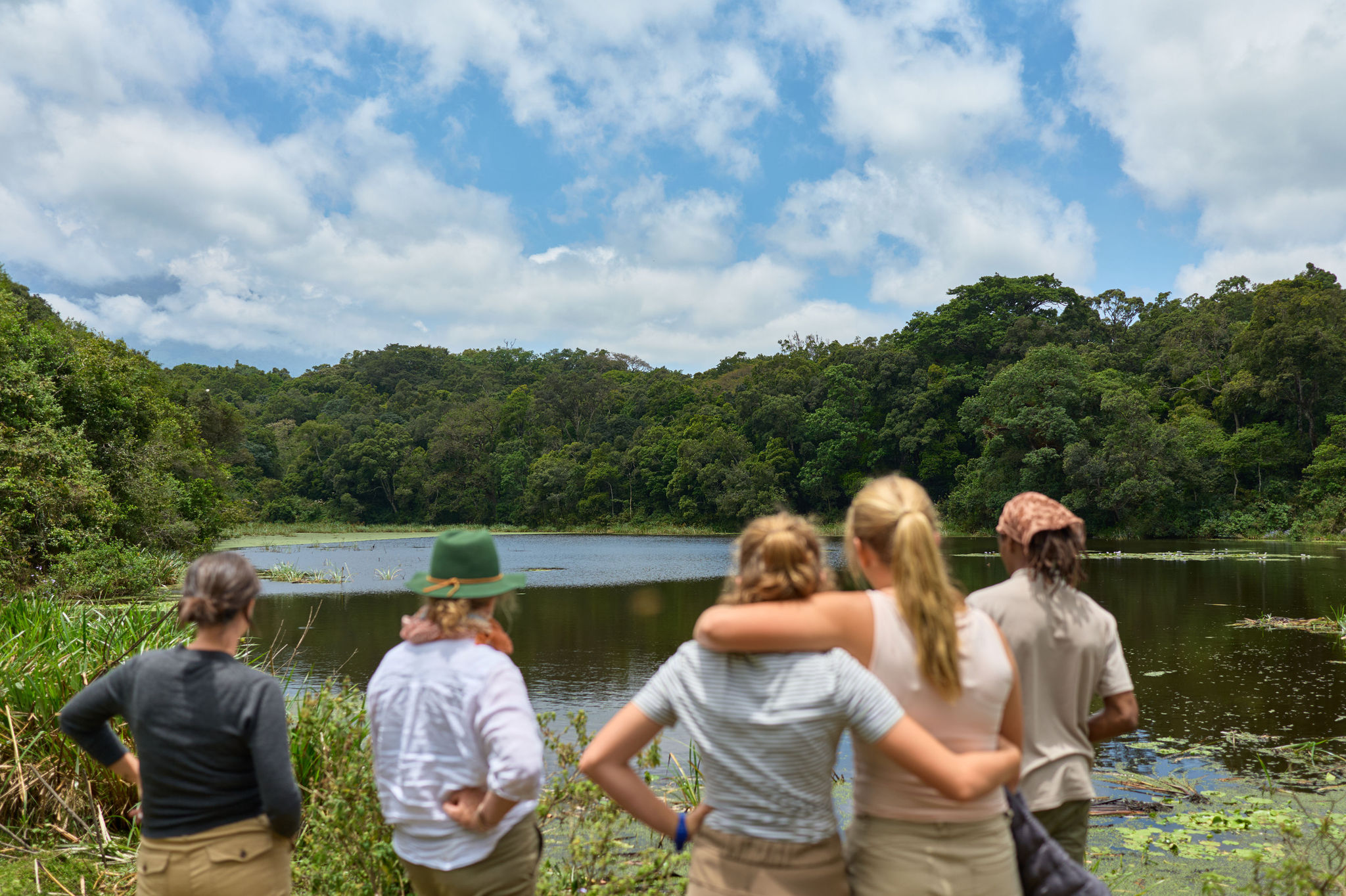
The next morning’s journey takes you deeper into the park to Ngurdoto Crater, where enormous fig trees rise from the earth like collapsed architecture as you drive to the rim. Often called a mini-Ngorongoro, this volcanic caldera features a swampy floor that acts as a natural sanctuary for many species. Descending into the crater on foot – the only way you are allowed – instantly changes your sense of scale and sharpens your attention. Surrounded by steep forested walls, you watch hammerkops and herons swoop above while you notice disturbed grass where buffalo recently passed, fresh tracks in the wet soil, and the scent of grasses and wild herbs crushed underfoot. Returning to camp for the afternoon, the rhythm of the stay allows you to choose your own pace. The active folk can set out on a longer hike deeper into the park toward the spectacular Fig Tree Arch, navigating paths where vines hang in curtains and secret waterfalls stay hidden, only given away by the distant roar of water crashing on rocks. Meanwhile, the contemplative folk can enjoy a quiet stroll to the nearby dam to observe colourful turacos crossing between trees, or simply remain in camp, reading beneath the canopy while wildlife drifts peacefully through the clearing.
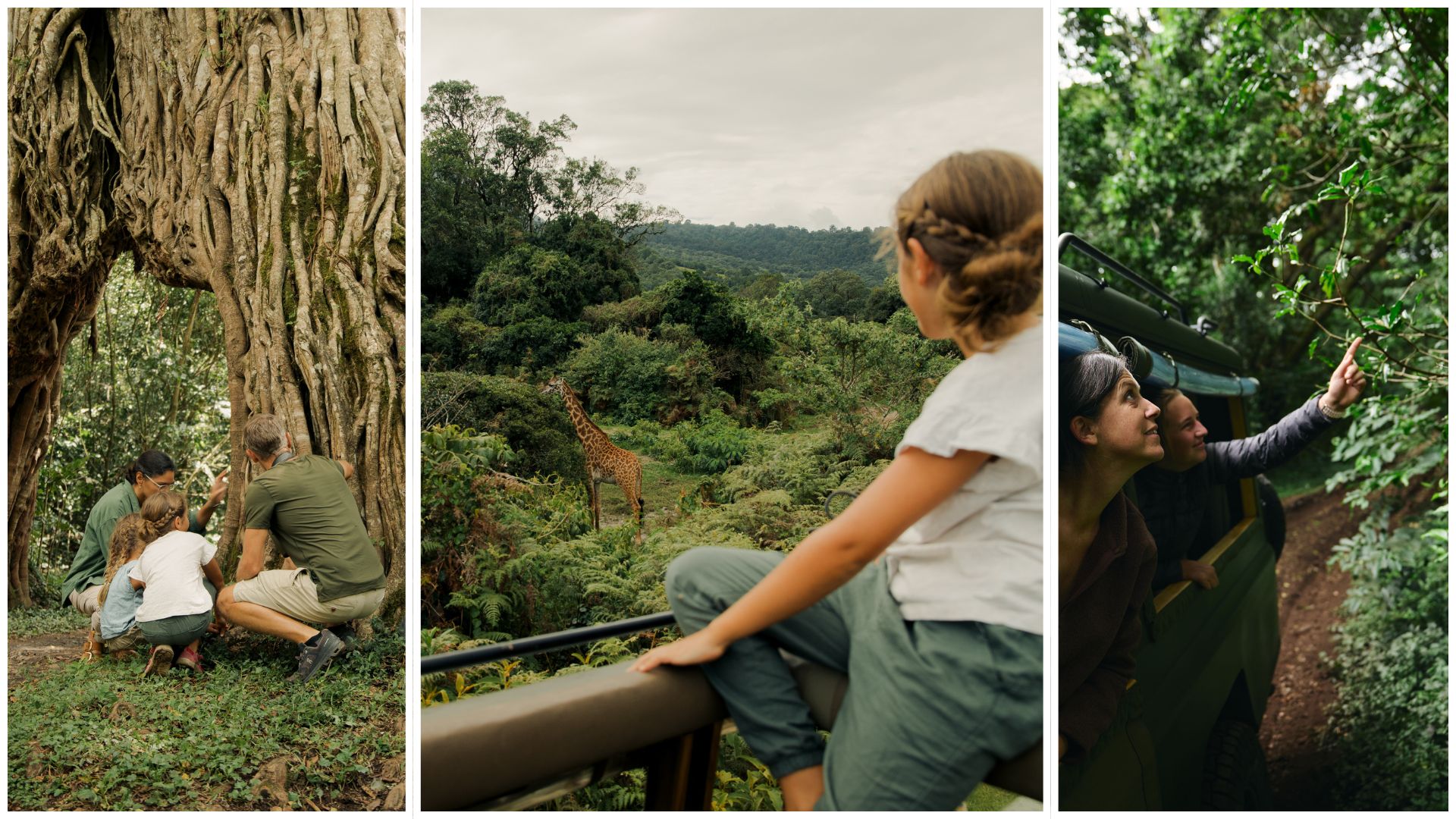
By the final morning, the real takeaway of this immersive experience becomes clear. The true luxury of the forest is not constant spectacle, but literal proximity. At Koroi, the forest never performs for you, it simply continues being itself around you. Over the course of three nights, as you live among the twisting trunks and clinging moisture, the atmosphere shifts from something you look at to something you feel. Slowly, seamlessly, you become a part of the forest, feeling as though, in some way, you always have been.