


Earlier this month, Okota Waste Management’s first highway pickup session got underway along one of Tanzania’s most famous safari corridors: the vital transit arteries leading out of Arusha towards Tarangire National Park, Lake Manyara, the Ngorongoro Conservation Area, Serengeti National Park, and beyond.
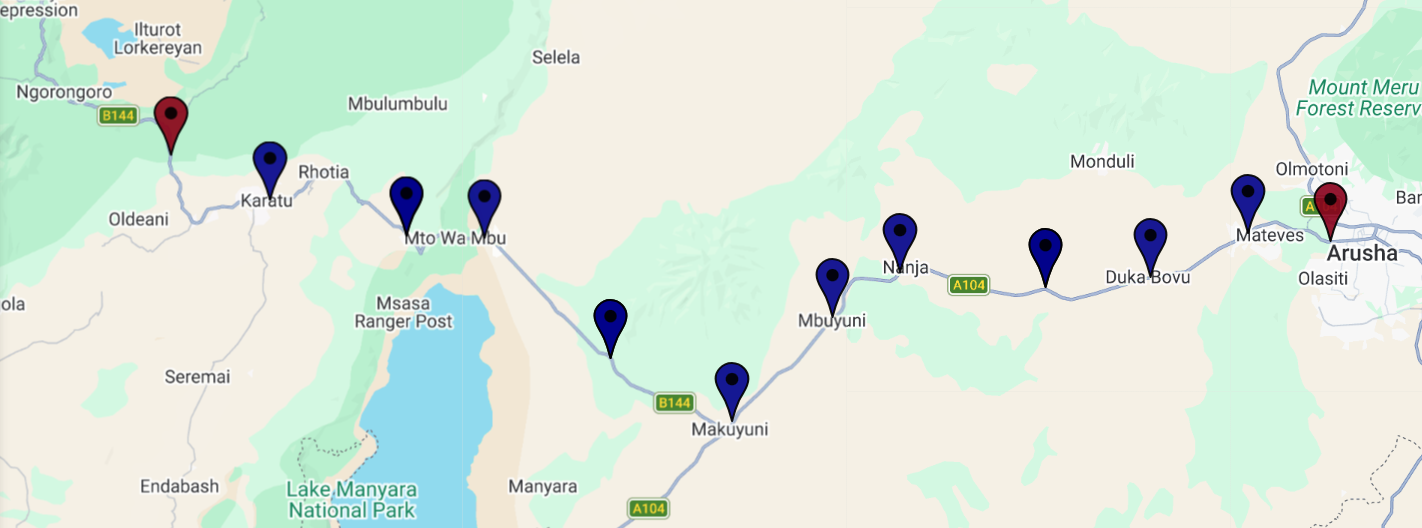
If you have ever been on a safari in Tanzania, chances are high that you have, or will, travel this road. It is a route framed by gentle rolling hills, wide open spaces sprinkled with grazing cattle, acacia trees, and open skies. However, it is far more than a scenic tourist trail. Every day, the same stretch of asphalt serves as a lifeline for surrounding communities and the country itself. Carrying school buses, local commuter vans, agricultural trucks loaded with produce, and regional freight all headed to various central, southern and western corners of the region.
Unfortunately, with heavy movement comes an unwanted passenger, roadside litter. It is a familiar scene on busy transit routes around the world, a plastic bottle whizzing out of a window, a crisp packet caught on a thorn bush, or an empty container fluttering along the shoulder. A single piece of trash might feel small, but multiplied across thousands of daily journeys, roadside corridors rapidly fill with discarded synthetic waste.
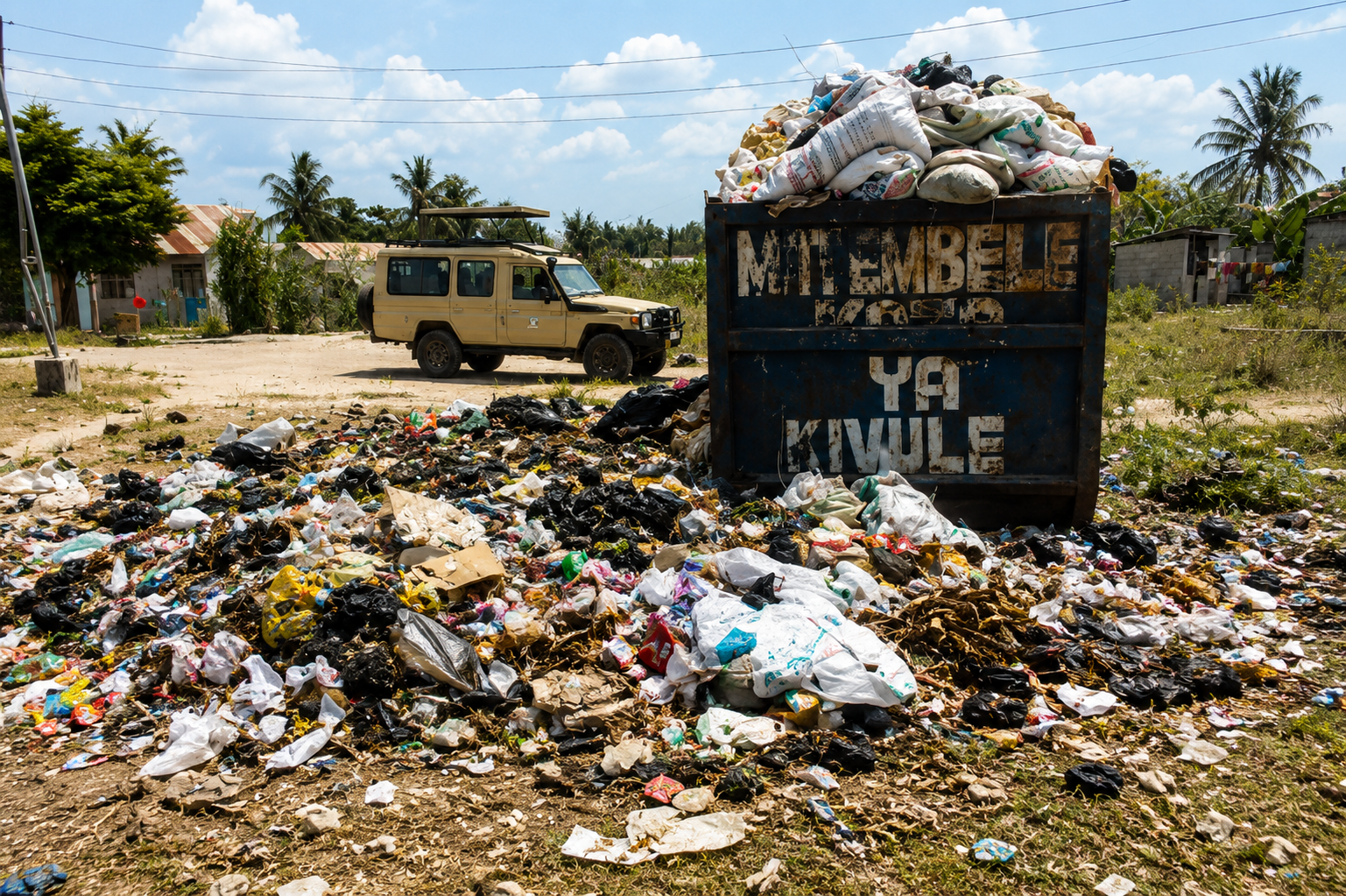
Along these roads, this isn’t just an eyesore, it’s an environmental hazard. Wildlife does not respect the invisible boundary between a highway shoulder and a protected ecosystem. Grazing animals like zebras, elephants, wildebeest, gazelle, and countless other creatures and critters naturally wander near these edges. Here, discarded plastic food packaging can easily be mistaken for natural forage, especially after being left and disintegrating into smaller micro-plastics. Ingesting synthetic debris leads to fatal blockages, while birds frequently pull flexible plastics into their nests, exposing hatchlings to micro-fibers and entanglement. Furthermore, heavy rains threaten to wash uncollected macro-plastics down into vital water bodies, including the sensitive hydrological basin of Lake Manyara, a part of the Great Rift Valley’s sprawling, inter-connected water systems.
There is also the matter of first impressions. Long before a safari vehicle passes under an official park gate, the journey itself sets the tone. Keeping these central access points clean honors the beauty of the landscape and respects the wild spaces waiting just down the road. This glaringly obvious reality inspired Okota Waste Management to launch dedicated cleanup drives along the Arusha-Manyara and Ngorongoro corridors, starting with that first milestone pickup session this month.
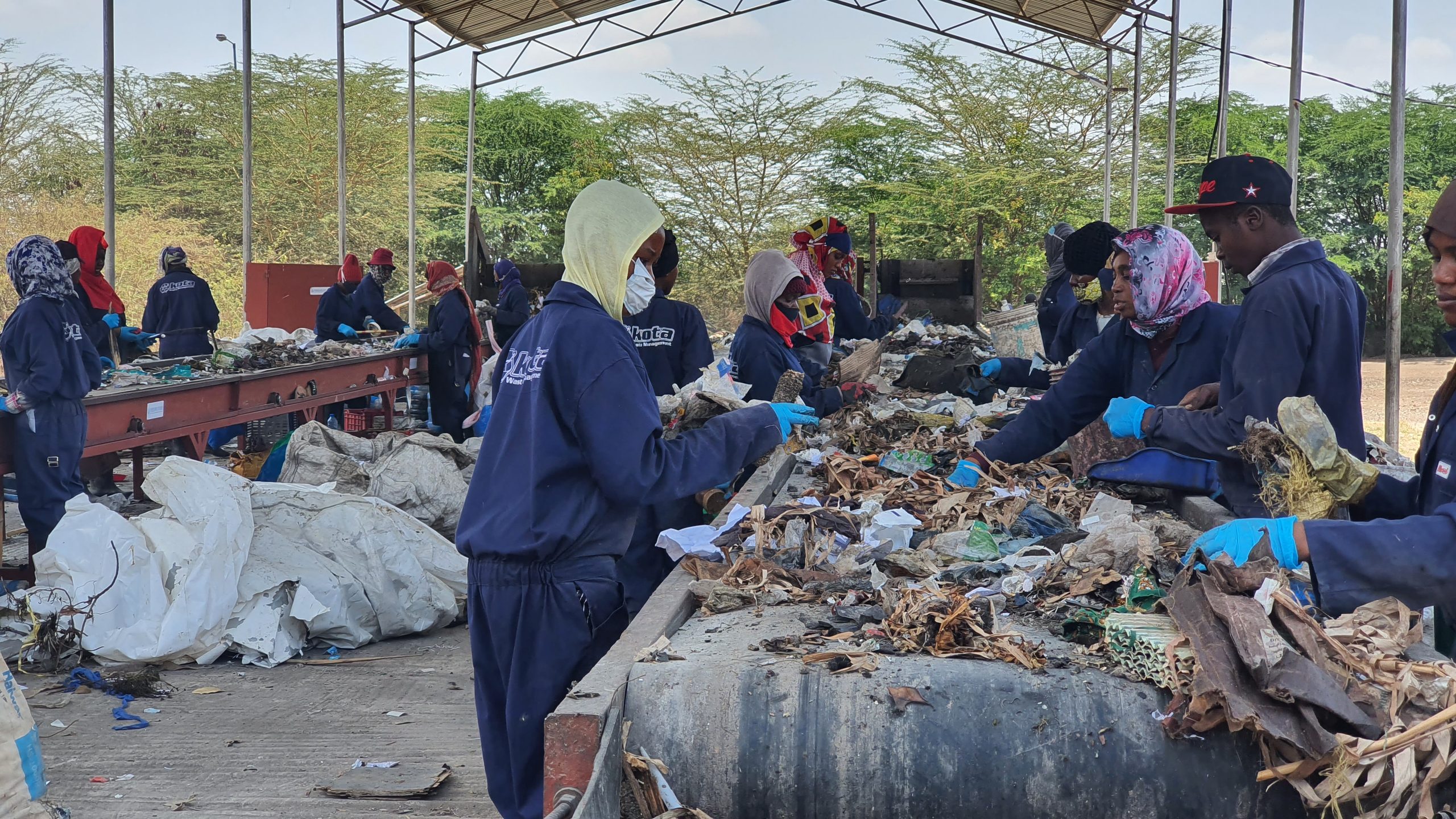
Instead of gathering roadside trash simply to dump it into an overflowing municipal landfill, Okota routes all recovered litter straight to its Material Recovery Facility in Arusha. Here, the story of a discarded bottle takes a productive turn. Inorganic plastics and packaging get sorted and repurposed into secondary raw materials, reducing the need for virgin plastic production. Organic food waste gets transferred to sister company Chanzi, where Black Soldier Fly Larvae naturally convert it into high-protein meal for livestock feed. Non-food organics get processed into biochar, a stable carbon material that enriches local soil health and sequesters carbon dioxide. Through treating roadside waste as a resource rather than trash, the initiative keeps up to 95% of collected material out of landfills.
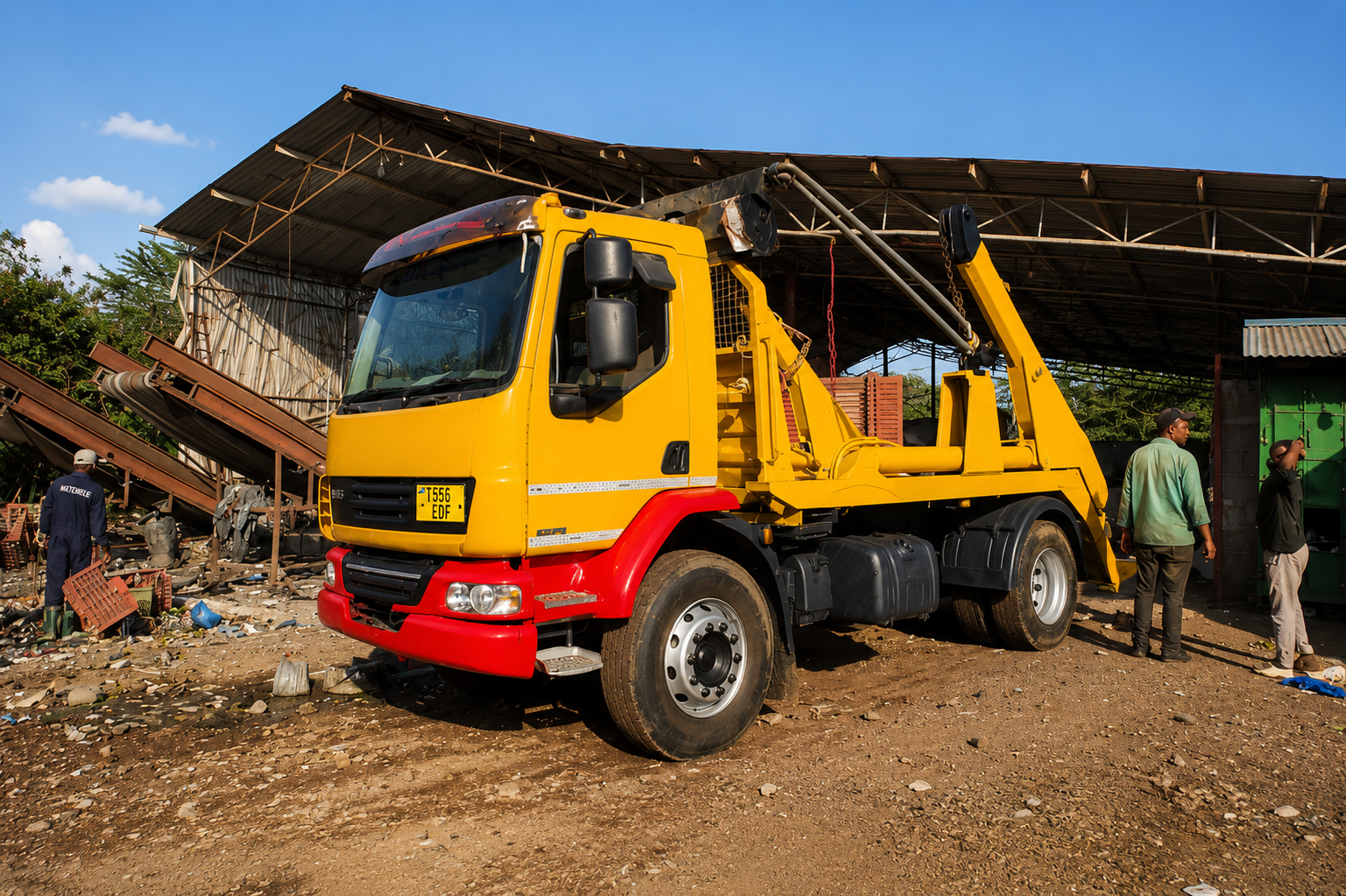
Yet, before high-tech sorting or bioconversion can happen, someone has to physically walk the road and pick the waste up. That human element is where the true power of the initiative lies. The highway cleanups combine formal green jobs with broad community action. Okota’s team (80% of whom are women) operates under formal contracts, fair wages, and proper protective gear, transforming informal waste collection into dignified work. At the same time, local tour operators, private businesses, and conservation supporters can sponsor dedicated miles of highway, funding the logistics, safety gear, and sweeping crews needed to keep high-traffic zones clear.
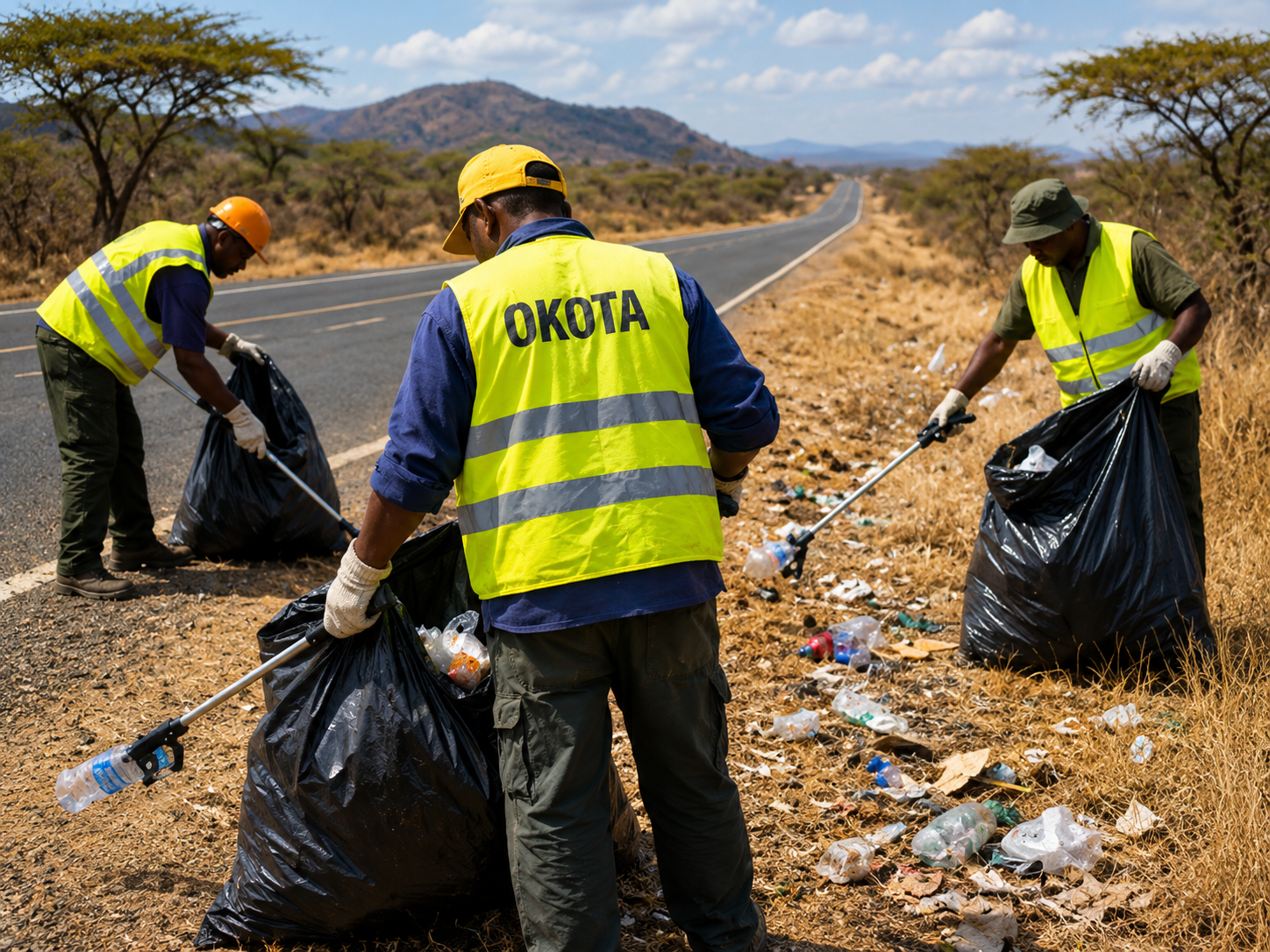
These efforts are paired with community cleanup days, bringing together local residents, civic groups, and school children to walk the roads together. It turns a frequently ignored problem into a shared point of local pride. We often think of conservation as something that happens deep inside national parks, monitored by skilled researchers, passionate rangers, and dedicated anti-poaching units. However, conservation also looks like everyday people pulling on heavy-duty gloves, grabbing collection bags, and clearing the brush along a busy public highway.
Tanzania and its roads as a counterpart, is a world defined by ceaseless motion. Wildlife migrates across vast plains (as well as roads themselves), local trade flows between southern and northern towns, and travelers journey toward some of the most remarkable natural wonders on Earth. The roads connecting these places deserve to be cared for as part of the ecosystem itself.
This first pickup session was just the beginning. It serves as a clear reminder that caring for Tanzania’s wild spaces doesn’t start at the park gate, it also begins on the road that takes us there.
In proud collaboration with: