

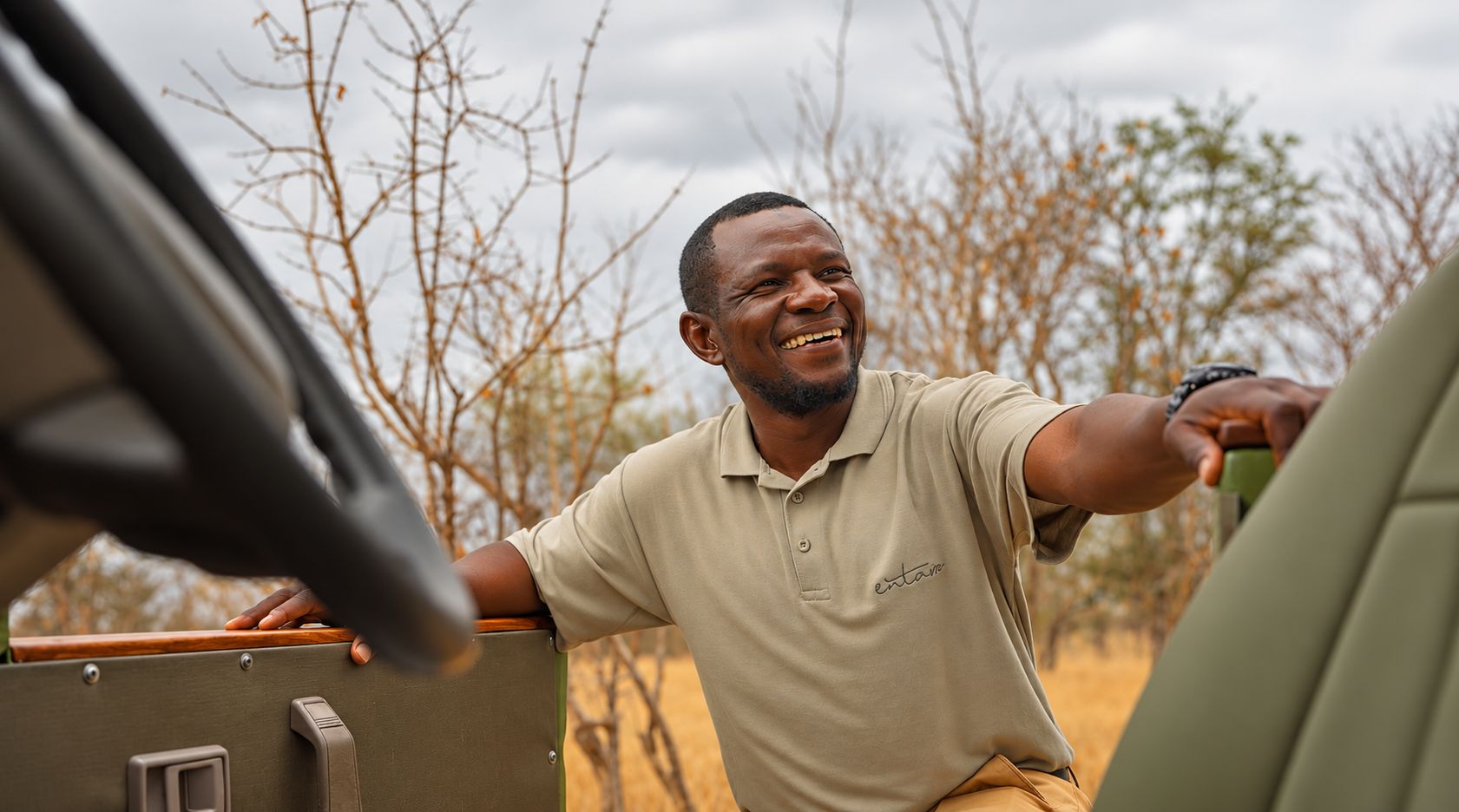
For Bakari, becoming a safari guide was a natural progression. Growing up in the wilderness of southern Tanzania, with a father who worked as a game ranger, he was introduced to the natural world from an early age. Today, with 16 years of experience as a field guide, he has spent much of his life learning its intricacies, sharing his knowledge with guests and navigating the unexpected moments that come with working in the bush.
We spoke to Bakari about his journey into guiding, the experiences that have stayed with him and what makes the Entara guiding team tick.


“My interest in guiding was personal. I was born and grew up in nature, in what is now Nyerere National Park, formerly the Selous Game Reserve. My father was a game ranger, so I grew up surrounded by the natural world.”
That early exposure eventually developed into a career spanning 16 years in the field. But becoming a good guide, Bakari explains, takes considerably more than an interest in wildlife.
“In my experience, it takes almost five years to become a good safari guide. You need time to develop your knowledge and understanding of the bush.”


We asked Bakari to describe the personality and spirit of the Entara guiding team in three words, he replied:
“Bush-wise, ethics and cooperation.”
One of Bakari’s favourite places to guide is the Randilen Wildlife Management Area. What he particularly appreciates about the area is the opportunity to enjoy wildlife sightings without the presence of other vehicles.
“When I find good sightings in Randilen, most of the time it’s just me and my guests enjoying them.”
But reading the bush is only one part of being a guide. Understanding the people in the vehicle is equally important.
“I pay attention to whether guests are hungry, especially when we’re carrying packed breakfasts or lunches, whether they’re tired, and whether they’re still interested in a particular sighting.”

He also adapts his approach depending on who he is travelling with.
“Cultural awareness is important. I consider whether guests are on their first safari or have been on safari before, and what their expectations are. My approach changes depending on whether I’m guiding a family, a couple, a group or older guests.”
For Bakari, the aim is to create an experience that meets those expectations while maintaining a strong sense of responsibility towards the natural environment.
Sixteen years in the field have naturally brought their share of remarkable wildlife encounters. One that has stayed particularly vivid in Bakari’s memory, when we asked him, took place on a walking safari.
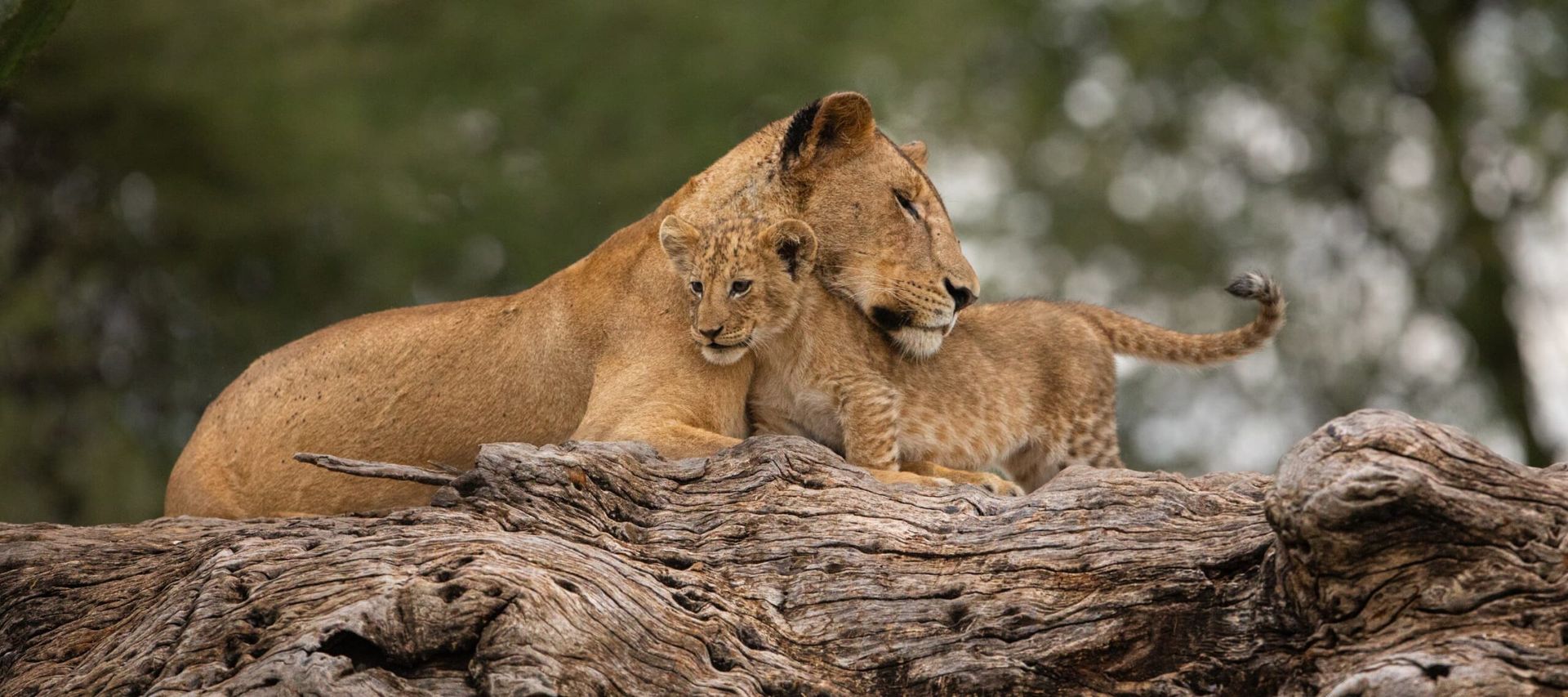
“We came across four lionesses and six cubs. One of the lionesses approached us very closely, coming within about five metres. She was growling and trying to protect her cubs.”
“We held our ground, and I shouted at her. Eventually, she stopped, turned around and walked away.”
It was an encounter that has clearly stayed with him, and a reminder of the different experiences that walking safaris can offer. Bakari particularly values activities such as walking safaris and fly camping, which give guests opportunities to experience the wilderness beyond the traditional game drive.


“With Entara, guests can experience ethical guiding and enjoy different activities, such as fly camping and walking safaris. These give them a great experience of the bush.”
Not every memorable bush experience involves a wildlife sighting. Some, as Bakari discovered while preparing for the opening of Olmara, involve getting rather, spectacularly, lost.
“One day, we went out to set up the Olmara fly camp for the first time with fellow guide Ethan, more of the guiding team and a photographer to take some marketing photographs. Later in the evening, we realised we had forgotten the kerosene for the lanterns.”
Bakari volunteered to drive back to the main camp to collect it. However, on his return journey, darkness had already fallen.
“There was no track or road to the fly camp, and halfway back the landscape features I had tried to register in my mind became the same. I started communicating with the team at both the fly camp and the main camp over the radio, but eventually I became quite confused. They were looking for me but we couldn’t see each other’s lights.”
They eventually decided for Bakari to spend the night where he was. The team would try to find him in the morning.
“When I woke up, I jumped out of the vehicle and looked around. The sun was just starting to rise, so I worked out the direction of the west. Looking that way, I could see Olmara, about four or five kilometres from where I had slept.”
“It was scary at the time, but it’s now one of my funniest memories in the bush.”


After so many years in the field, Bakari has also noticed changes in the natural world around him. When we asked him how his understanding of wildlife and the natural world changed since you first started guiding, he chose to highlight, importantly, that…
“Global warming is bringing many changes to wildlife and the natural environment. For example, the movements and migration patterns of birds and other animals are not the same as they used to be.”
It is a perspective that comes from years of spending time in the field, observing the natural world across changing seasons. For Bakari, the most rewarding part of guiding remains seeing guests enjoy their time in the wilderness.
“Ultimately, I want guests to have a great experience and to feel that their expectations have been met.”
After 16 years, he continues to share the landscapes he grew up in, one safari at a time.