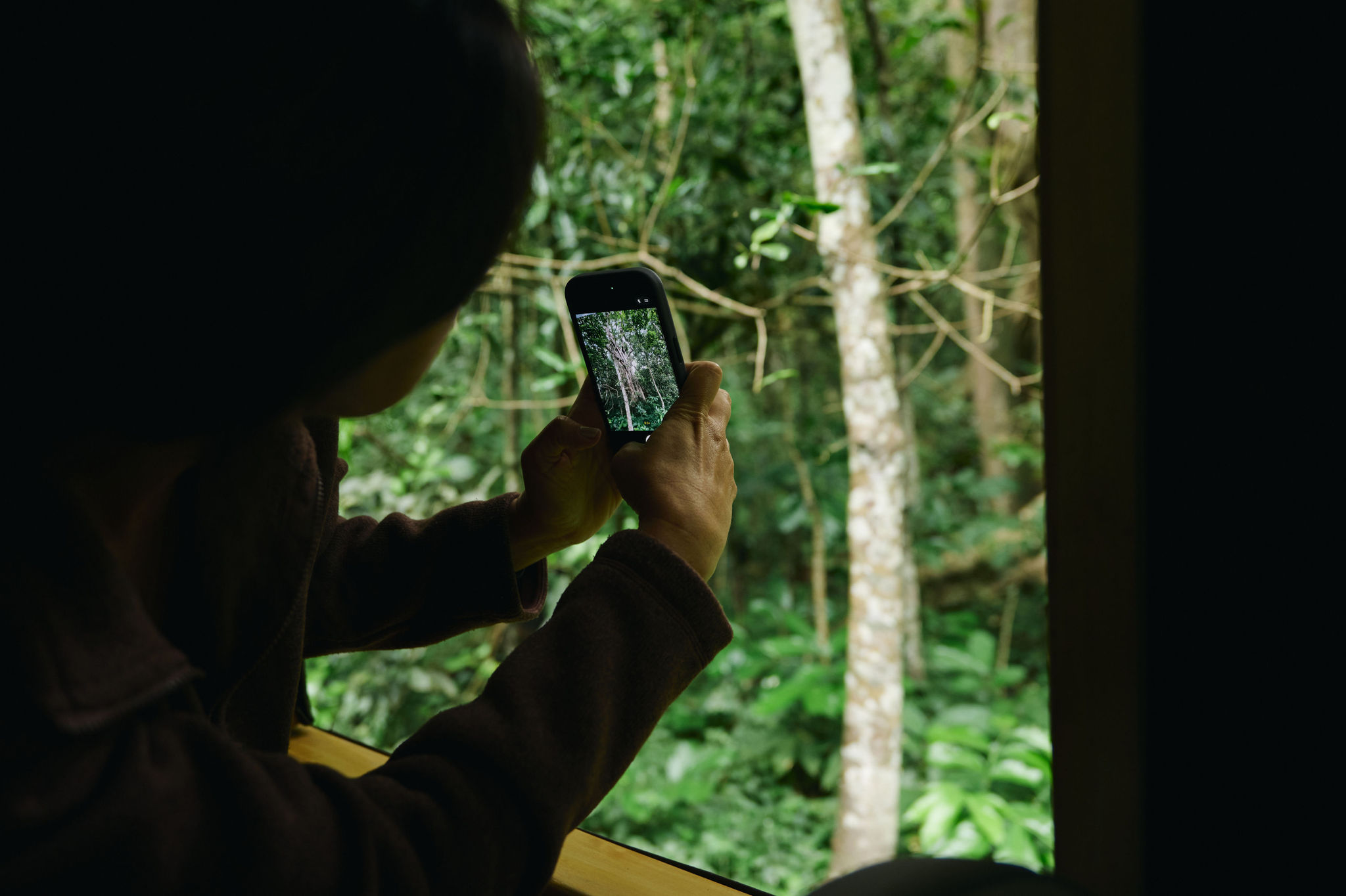



How to capture the perfect safari photo.
There is an undeniable magnetism to the safari experience, the raw unpredictability, the sudden quickening of the pulse, and the tingling sensation that you are standing on the precipice of a once-in-a-lifetime scene. But translating that visceral magic into a compelling photograph is an art form that requires more than just a high-end kit. Whether you are navigating the infinite horizons of the Serengeti or the emerald, mist-shrouded canopies of Arusha National Park, capturing the soul of the wild requires a delicate dance of patience, environmental awareness, and technical intuition.
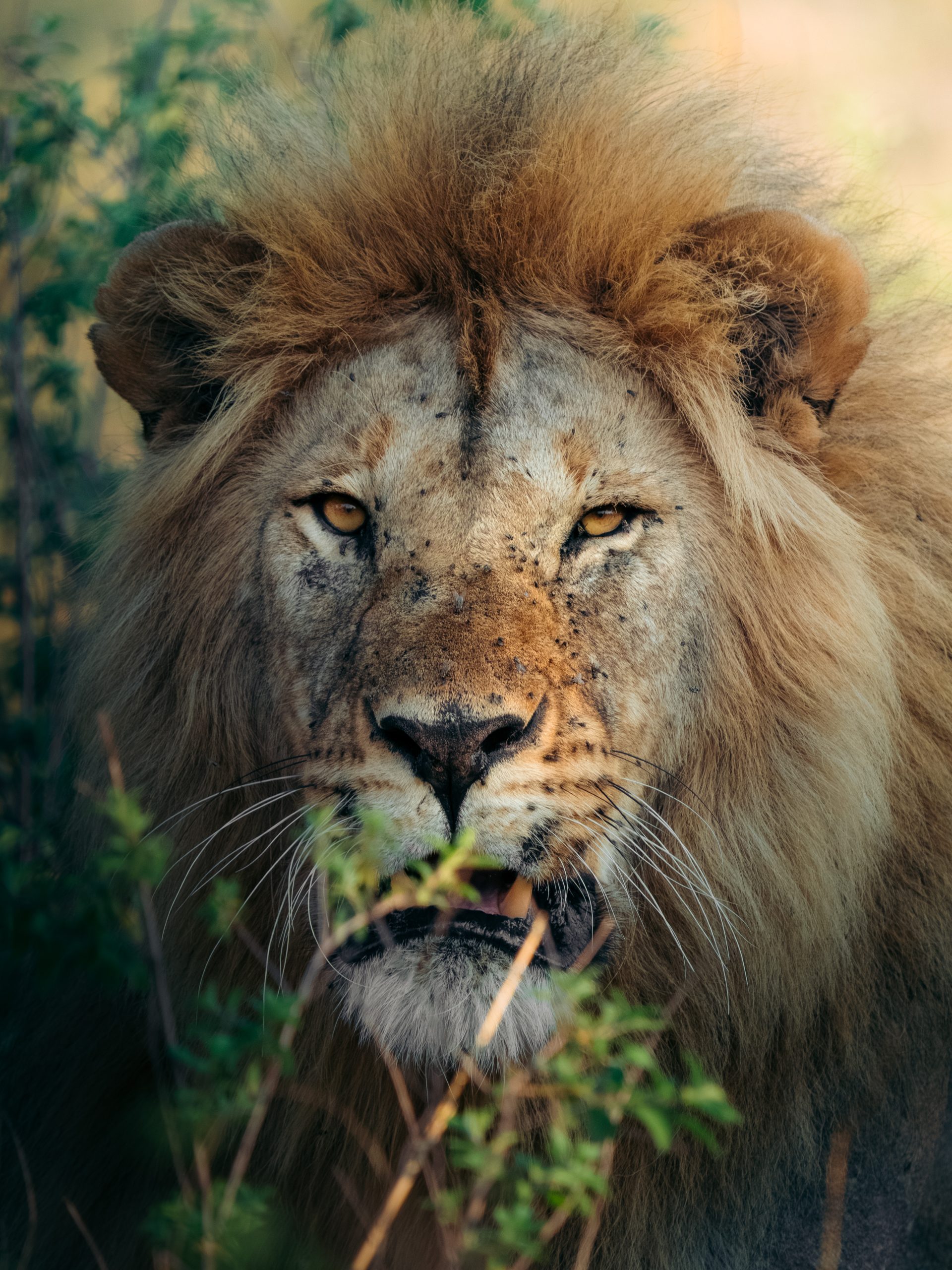
In the world of photography, light is the undisputed protagonist. It is the foundation upon which every visual story is built. In Tanzania, we are gifted with some of the most ethereal light on the planet, specifically during the “golden hours” of dawn and dusk. During these windows, the sun is low and directional, casting a warm, cinematic glow that accentuates the texture of a lion’s mane or the rugged hide of an old tusker. Conversely, the midday sun is notoriously unforgiving. If you find yourself shooting under a vertical sun, lean into the drama and look for high-contrast silhouettes or focus on tight, textured close-ups in the shade. Sometimes, the “blown-out” brightness of the African noon can be used creatively to emphasize the harshness of the environment.
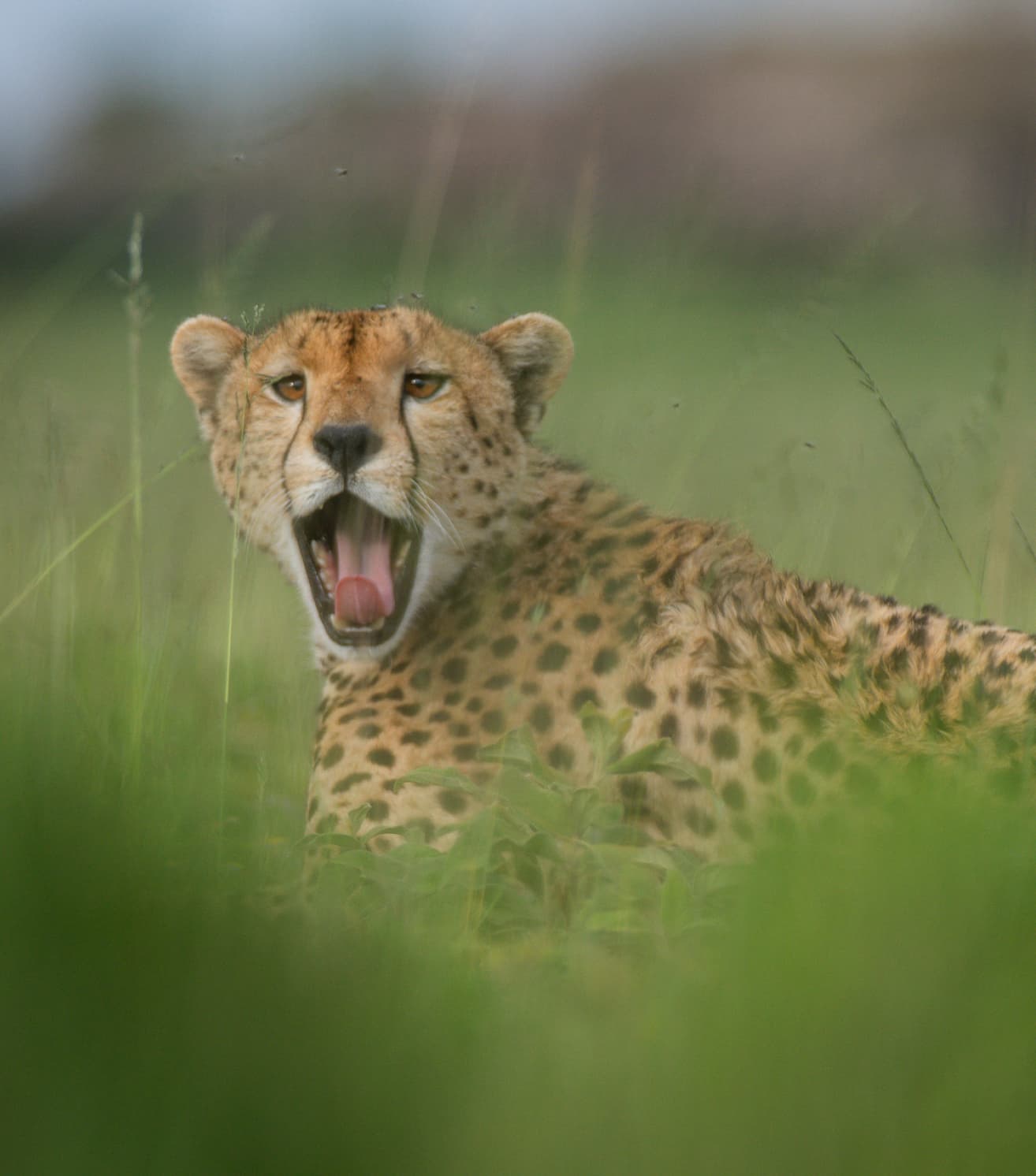
However, technique is nothing without observation. To photograph wildlife is to become a student of behavior. A flick of a leopard’s tail, a subtle shift in a herd’s formation, or the intent gaze of a cheetah scanning the tall grass. These are the “tells” that precede the action. The most powerful images often don’t capture the kill or the sprint, but the unbearable tension just before it. Instead of reacting to a moment that has already passed, learn to anticipate. Keep your camera at the ready, pre-focus on the eyes, and use burst mode to ensure you catch the exact millisecond where the story unfolds.
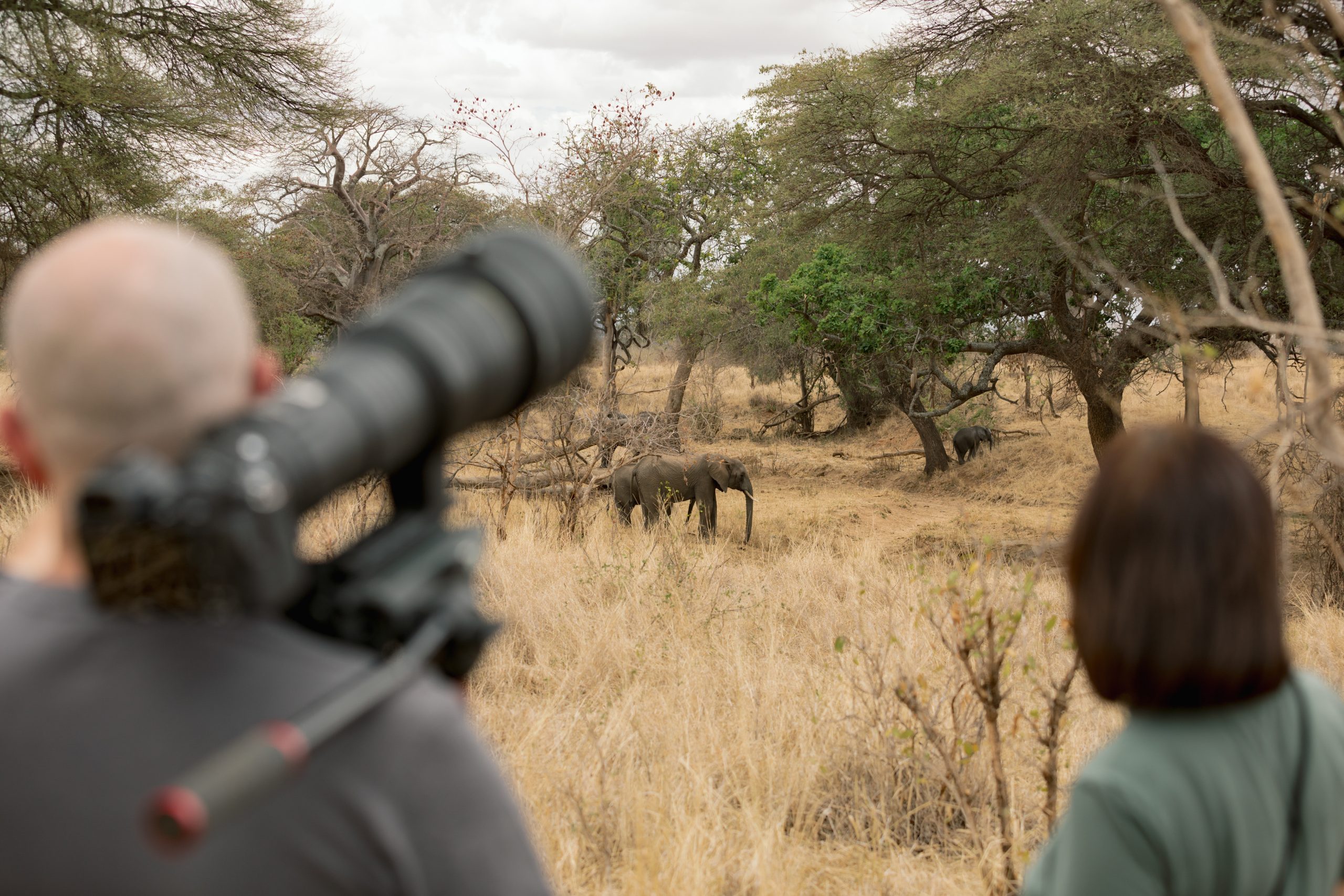
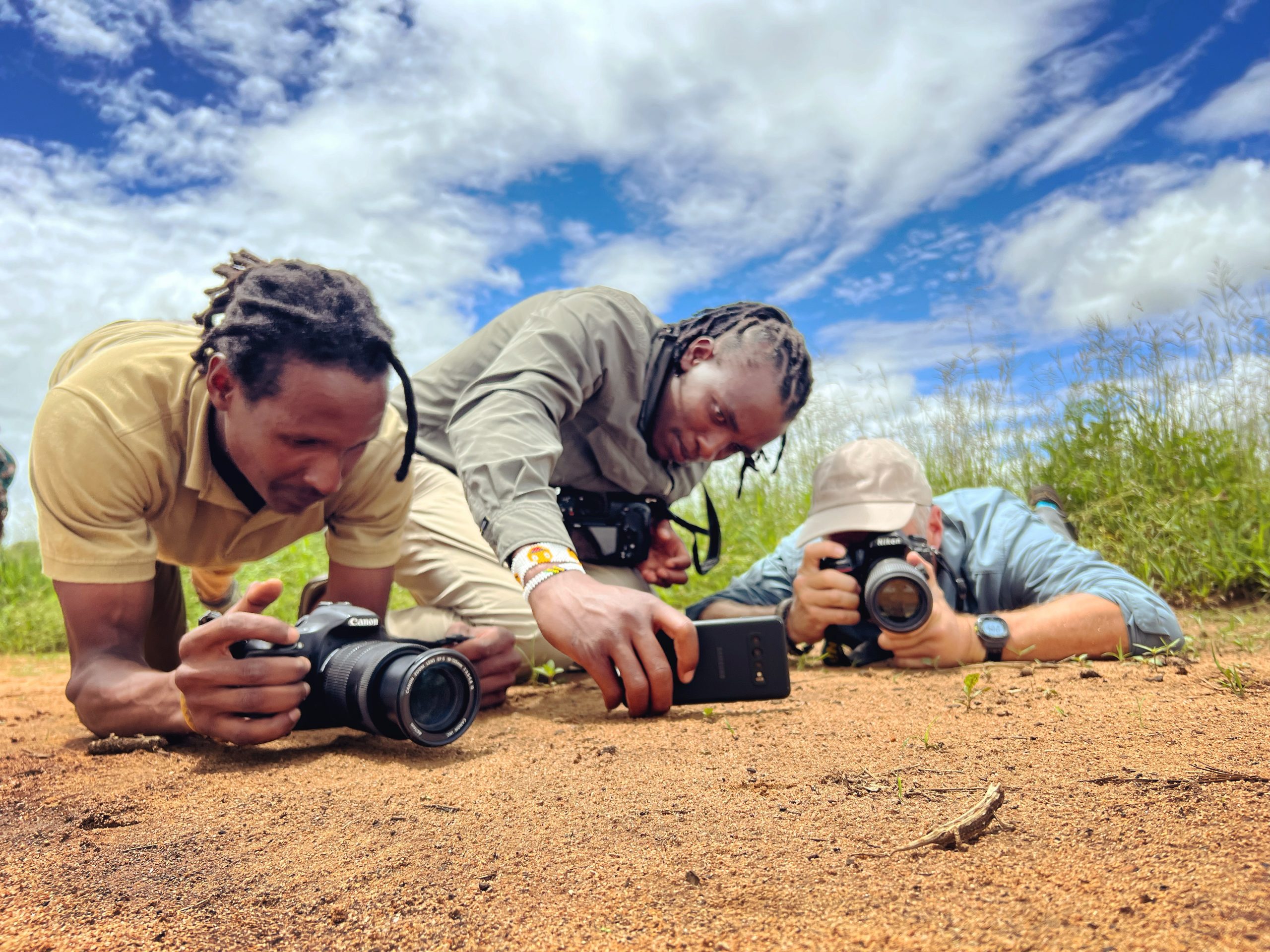
Compositionally, we must move beyond the “specimen shot.” While it is tempting to center every animal in the frame, true storytelling often lies in the Rule of Thirds. Placing your subject off-center creates a sense of movement and direction, giving the animal “room” to breathe or look into. Don’t be afraid to pull back, a lone giraffe dwarfed by a sweeping horizon or framed by a towering Baobab provides essential context and scale. Use your environment to your advantage, shooting through a veil of golden grass or a frame of acacia branches creates a layered, immersive depth that pulls the viewer into the scene with you. Whenever possible, get low. Shooting at eye level minimises the emotional distance between the viewer and the subject, creating an intimate connection that a top-down shot simply cannot achieve.
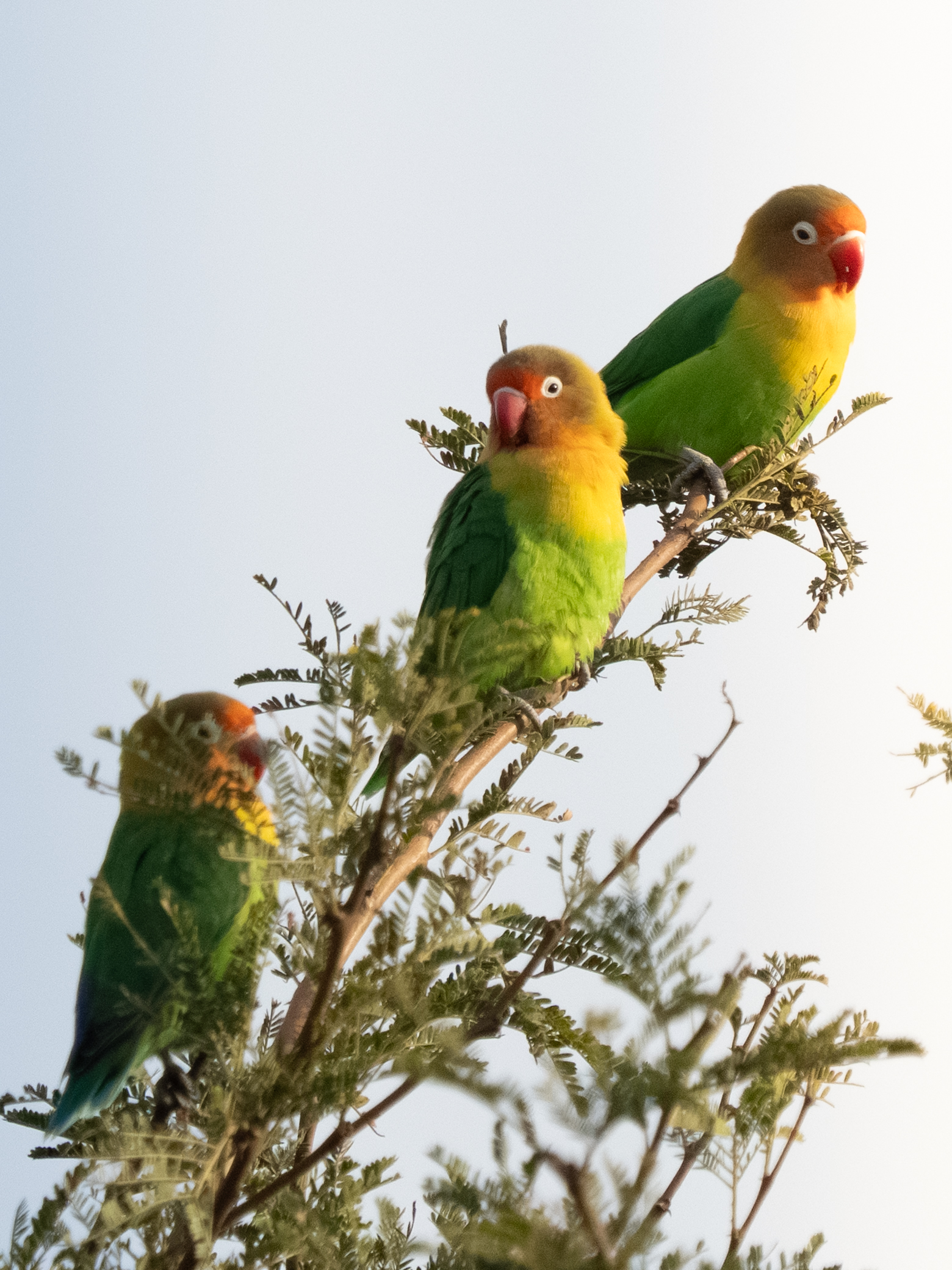
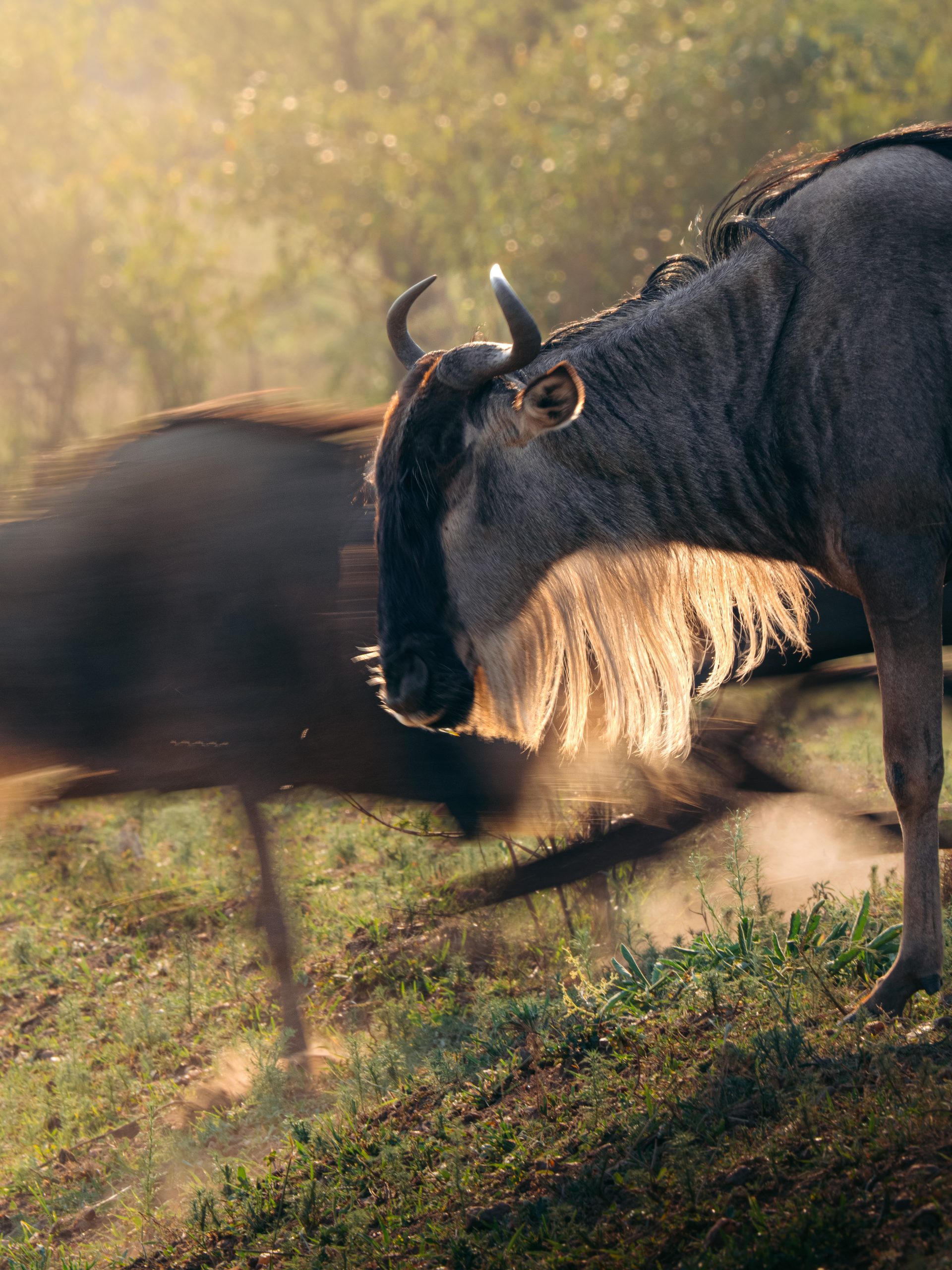
Regarding equipment, remember that while a 200-400mm lens is the industry standard for safe, respectful proximity, your settings are your real power tools. A fast shutter speed (1/1000s or higher) is non-negotiable for freezing action, while a wider aperture (f/4 to f/5.6) will help your subject pop against a creamy, blurred background. Yet, we often tell our fellow photographers to embrace the imperfect. A bit of motion blur in a bird’s wing or the swirling dust of a wildebeest crossing adds a sense of urgency and authenticity that a sterile, sharp image might lack.
Finally, the most valuable tools in your bag aren’t electronic, they are patience and respect. Safari photography is a waiting game. You might sit in silence for an hour with nothing but the heat for company, only for the world to explode into action in a matter of seconds. Stay still, let the landscape accept your presence, and never compromise an animal’s well-being for a “better” angle. The most profound images are those captured in harmony with the wild, not through intrusion. When you respect the rhythm of the bush, the stories will eventually come to you.