





Few birds suffer from a public relations problem quite like vultures. Cast as ominous silhouettes circling overhead, they are often misunderstood as symbols of death. Yet on safari in Tanzania, where life and death unfold across the plains, vultures reveal their true role as indispensable custodians of the wild. Far from being harbingers of doom, they are among the most vital and under appreciated guardians of healthy ecosystems.
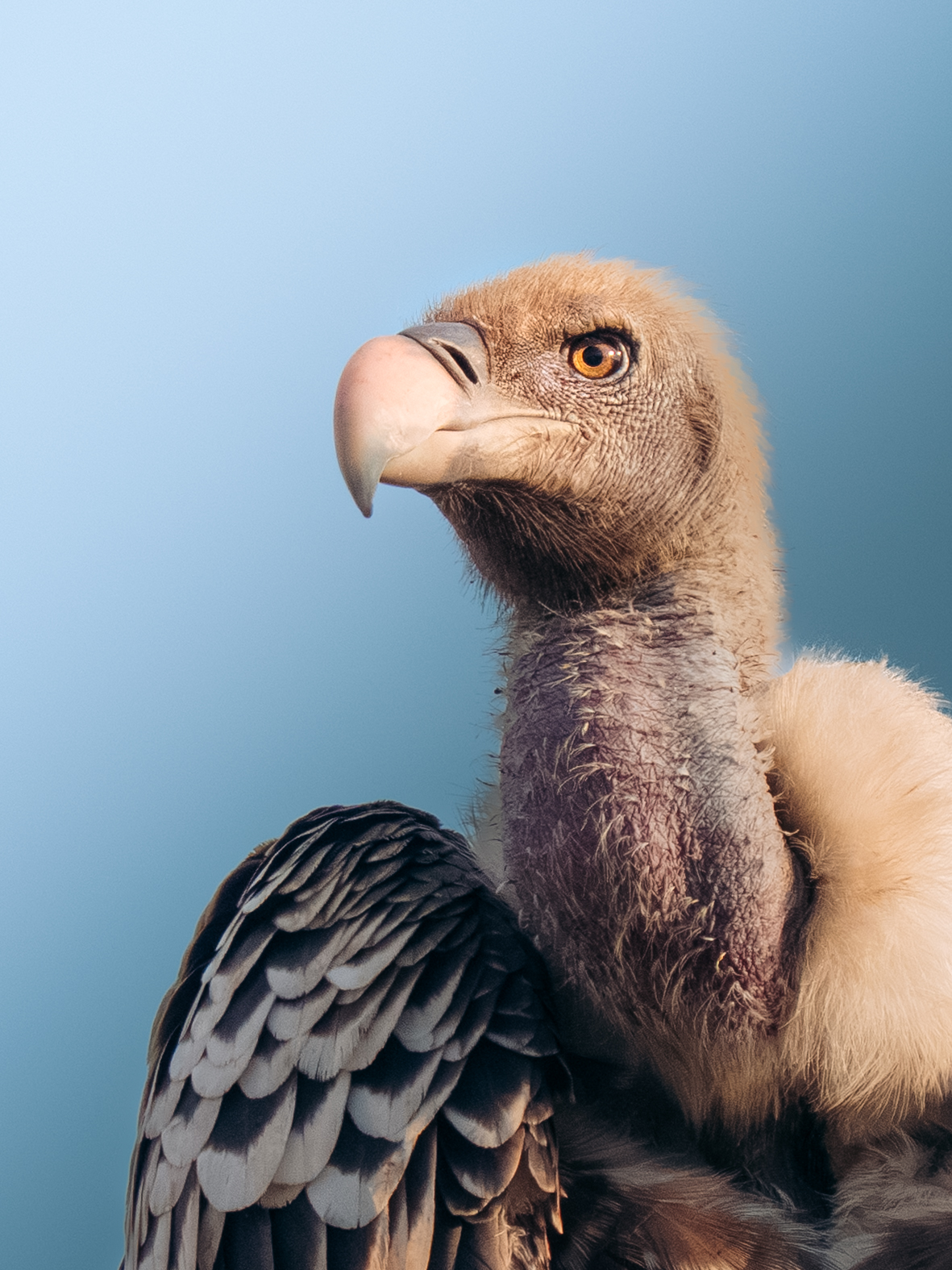
Vultures are obligate scavengers, feeding almost exclusively on animals that have already died. In landscapes such as the Serengeti (and other national parks) carcasses are a natural part of the cycle, whether from predation, drought, migration exhaustion, or old age. Without rapid removal, these remains would become breeding grounds for dangerous pathogens like anthrax, rabies, and botulism, threatening wildlife, livestock, and nearby communities. Their highly acidic stomachs neutralize bacteria and toxins, reducing carcasses to bones within hours and halting disease at its source.
On a Tanzanian safari, guests often witness this dramatic yet essential process. After a lion pride brings down a wildebeest during the Great Migration, vultures complete the story. Descending in spirals from high thermals, they scan the plains with extraordinary eyesight. Their arrival signals renewal. Nutrients return to the soil, the land is cleared, and the ecosystem resets. By consuming carcasses quickly, vultures prevent population surges of opportunistic scavengers like feral dogs and rats, which are more likely to spread diseases to humans and livestock, a lesson tragically illustrated in South Asia, where vulture declines led to surging feral dog populations and rabies outbreaks.
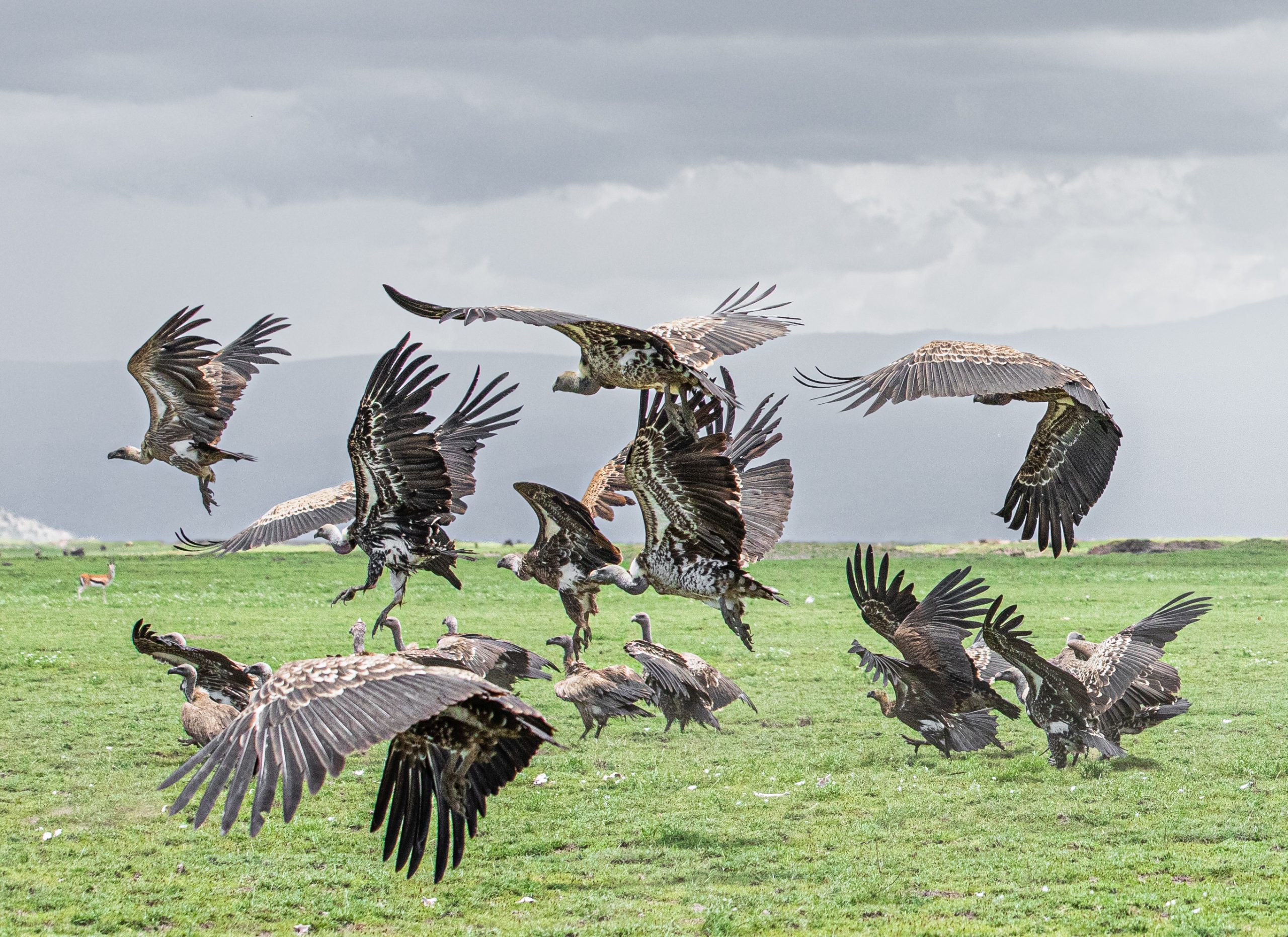
Africa’s savannahs are finely tuned ecosystems. In Ruaha or the remote southern reaches bordering Ugalla, vultures form a specialized guild of scavengers. Hooded vultures patrol camps and riverbanks, white-headed vultures forage in woodland, and massive lappet-faced vultures use their strong beaks to open thick hides that smaller species cannot penetrate. Each species plays a role, ensuring nothing is wasted.
Yet this vital workforce is in crisis. Across Africa, vultures face poisoning, accidental and deliberate, power line collisions, habitat loss, and the illegal wildlife trade. Globally, over two-thirds of vulture species are threatened, and in parts of Asia, populations have declined by over 95% in mere decades. In Tanzania, the decline is particularly concerning. Safari landscapes rely on intact ecological processes. Without vultures, disease risk rises, nutrient cycles slow, and the wilderness experience subtly changes.
Rehabilitating the image of vultures begins on safari. Guides who interpret a descending spiral of birds transform what might appear grim into something profound. Guests begin to see vultures not as symbols of death, but of balance. Their bald heads and hunched postures are evolutionary tools for hygiene and efficiency. Around the world, from Africa to Europe and the Americas, vultures perform the same quiet service, but in Tanzania, where wilderness still operates largely on its own terms, their role feels immediate.
T
o protect vultures is to protect the integrity of safari itself. Conservation efforts, anti-poisoning campaigns, community engagement, and simply appreciating these creatures, are critical steps forward. The next time you see vultures circling above golden grasslands, consider what they represent – a cleaner landscape, a healthier ecosystem, and the unseen labor that keeps the wild thriving. In the grand theatre of the savannah, vultures may not be the stars, but without them, the show cannot go on.


